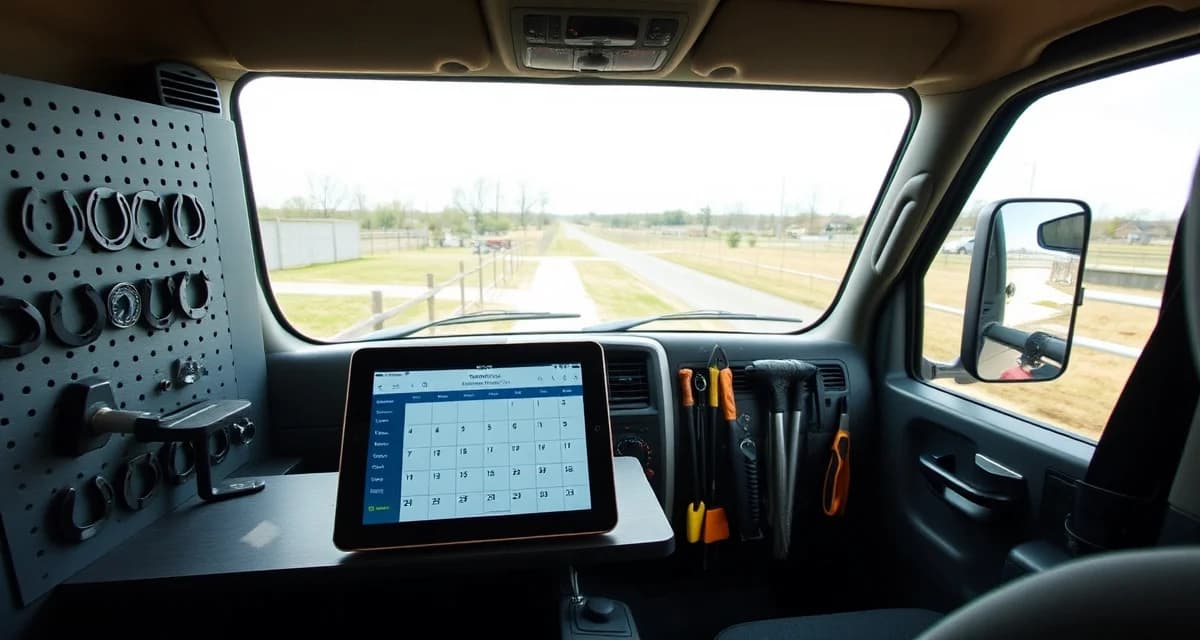
Farrier App for St. Louis MO: Managing Gateway City Horse Communities
St. Louis metro area has 22,000+ horses concentrated in suburban St. Charles and Jefferson counties -- and the farriers serving that market face the particular challenge of a sprawling suburban geography where the horse-dense zones are on opposite sides of the metro area. A farrier running both the St. Charles County corridor and Jefferson County in the same day is potentially crossing the entire metropolitan footprint.
FarrierIQ's route optimization is built for exactly this kind of spread-out suburban market. It identifies the geographic clustering opportunities -- St. Charles clients on dedicated days, Jefferson County clients on their own days -- that make the St. Louis metro farrier book manageable rather than chaotic.
TL;DR
- St. Louis metro has 22,000+ horses concentrated in suburban St. Charles County (north/west -- fastest-growing, western pleasure culture) and Jefferson County (south -- traditional working farms, trail riding, rural communities); these zones are on opposite sides of the metro and should never share a route day.
- St. Charles County's Highway 94 and Wentzville-O'Fallon corridors create concentrated routing opportunity -- horse property developments in these areas cluster well for efficient suburban route days.
- Jefferson County has longer drives between stops than St. Charles's suburban grid -- route efficiency matters more here, and the rural communities along the Big River corridor can have spotty connectivity requiring offline capability.
- Lincoln and Warren counties north and west of the metro have growing horse populations that create route extension opportunities as a book grows in those directions.
- St. Louis's horse market spans from serious show competitors at structured barns in St. Charles County to backyard pleasure horses in Jefferson County's rural communities -- different intervals, different communication styles, different service types.
- No Missouri state farrier licensing requirement exists -- but St. Charles County's suburban professional demographic expects organized professional service, while Jefferson County's traditional horse culture values reliability and practical competence.
- Illinois across the river creates potential market extension for St. Louis farriers -- Madison and Monroe County IL have horse communities accessible from the metro without bridge-crossing complexity comparable to Cincinnati or Louisville.
The St. Louis Metro Horse Belt
The horse-concentrated areas of greater St. Louis cluster in predictable geographic zones:
St. Charles County: The fastest-growing suburban area of the metro, with a strong western pleasure and trail riding culture. Horse property developments along Highway 94 and in the Wentzville and O'Fallon corridors create concentrated route opportunities.
Jefferson County: South of St. Louis, Jefferson County has a traditional horse culture built around working farms, trail riding associations, and the rural communities along the Big River corridor. Longer drives between stops make route efficiency more valuable here.
Lincoln and Warren Counties: Exurban communities north and west of the metro with growing horse populations.
Records and Communication for a Mixed Suburban Market
St. Louis's horse market spans from serious show competitors at structured barns in St. Charles County to backyard pleasure horses in Jefferson County's rural communities. Managing a book that spans both means different scheduling intervals, different communication styles, and different service types.
FarrierIQ's client management tools let you tag horses by discipline and care level, set appropriate intervals for each, and send targeted communication that makes sense for each client segment rather than one-size-fits-all messages.
Frequently Asked Questions
What farrier app is popular in St. Louis Missouri?
FarrierIQ is used by farriers serving the greater St. Louis metro area. The platform's route optimization handles the sprawling suburban geography, grouping St. Charles County clients, Jefferson County clients, and the north-county corridors into efficient day routes that minimize cross-metro driving. As the St. Louis metro continues expanding westward and southward, route optimization becomes increasingly important for farriers whose books span multiple suburban counties.
How do St. Charles County MO farriers manage suburban routes?
St. Charles County's suburban density creates both opportunities (horses are close together in development corridors) and challenges (suburban traffic, limited cross-county access). FarrierIQ's route optimization sequences daily stops for minimum drive time, while client management tools track each horse's records and automate appointment reminders. The combination lets farriers serve the St. Charles County corridor efficiently without spending two hours navigating suburban traffic patterns manually.
Is there farrier software for the Jefferson County MO horse community?
FarrierIQ handles the Jefferson County market well, including the rural roads and spotty connectivity in some of the more remote areas south of Arnold and Festus. The app's offline mode keeps records and schedules accessible without a cell signal, while route optimization reduces the drive time between farms that are spread across Jefferson County's rural geography. The platform manages the full St. Louis metro from St. Charles County to Jefferson County and the rural outlying areas.
How do St. Louis farriers handle the different client cultures of St. Charles County and Jefferson County?
St. Charles County's suburban professional demographic (Wentzville, O'Fallon, Lake St. Louis corridor) expects digital invoicing, automated appointment reminders, and organized records as baseline professional service -- these clients moved from suburban St. Louis County and brought professional service expectations with them. Jefferson County's traditional horse culture (working farms, trail riding families, the rural Big River corridor communities) is more accustomed to cash or check payments, handshake scheduling, and less digital communication. Both client types can coexist in the same FarrierIQ system -- the suburban St. Charles clients get the full suite of automated features while Jefferson County rural clients get the reliability and practical record-keeping without the automation they don't need. The farrier client management guide covers how to configure both client types efficiently without the suburban features feeling intrusive to rural clients.
What's the most efficient route structure for a St. Louis farrier covering both St. Charles and Jefferson counties?
The most fundamental discipline is never combining St. Charles County and Jefferson County in the same day. The two zones sit on opposite ends of the St. Louis metro -- the drive between Wentzville and the rural Jefferson County communities south of Festus crosses the entire metropolitan footprint and adds 60-90 minutes of unproductive windshield time. A practical weekly structure: Tuesday-Thursday for St. Charles County suburban days (Highway 94 corridor clustered by FarrierIQ's route optimization), Monday-Wednesday for Jefferson County rural days with offline preparation before heading south, Friday for Lincoln and Warren County extension stops if the book extends that direction. New clients get scheduled based on which county day they belong on, not which day is next available in the calendar.
Sources
- University of Missouri Extension, Missouri horse population and St. Louis metro equine management data
- Missouri Department of Agriculture, state equine industry statistics
- American Farrier's Association (AFA), Midwest regional farrier professional resources
- American Farriers Journal, St. Louis metro farrier market and suburban routing data
Get Started with FarrierIQ
St. Louis's 22,000+ horse market across St. Charles County's dense suburban corridors and Jefferson County's spread-out rural communities requires zone-day discipline and route optimization to prevent the cross-metro driving that unstructured scheduling creates -- FarrierIQ's route optimization and offline capability for Jefferson County rural stops handle the full Gateway City market. Try FarrierIQ free and build your first optimized St. Louis zone day on your next work day.