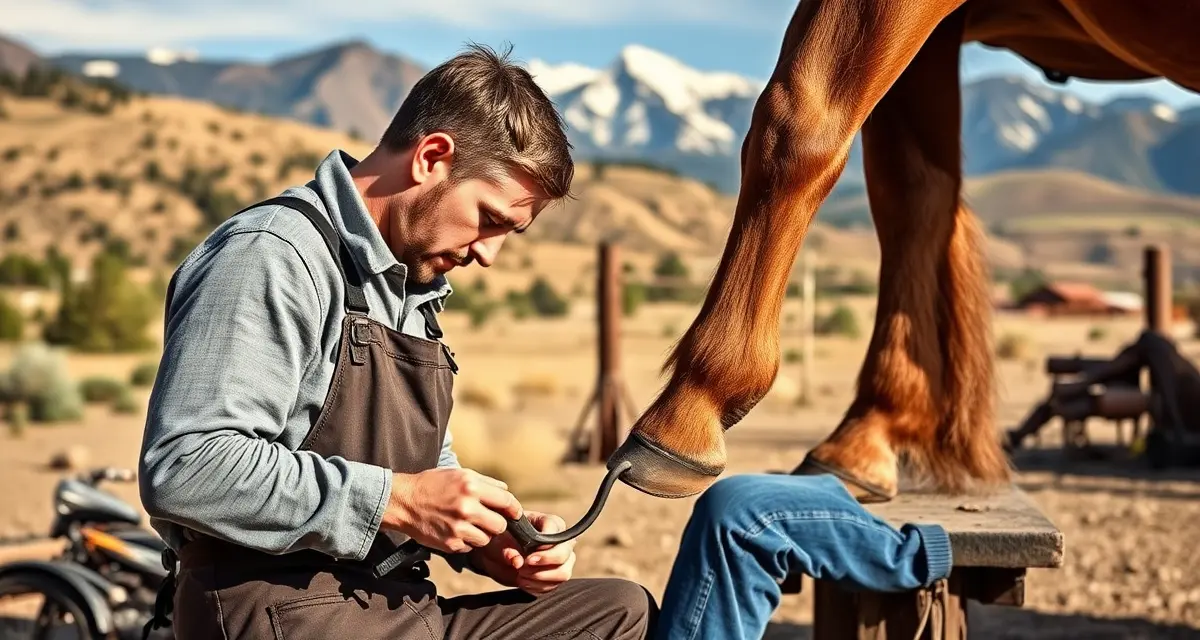
Farrier App for Colorado Springs CO: Managing Pikes Peak Region Horse Communities
Colorado Springs is one of the most geographically varied farrier markets in the country. The Colorado Springs metro has 28,000+ horses, with communities ranging from flat suburban Falcon to mountain towns like Woodland Park sitting above 8,000 feet elevation. That spread creates real logistical challenges -- and it's where the right farrier app makes a measurable difference.
You're not just routing across suburbs here. You're dealing with mountain passes, elevation changes, and remote properties where cell service drops out entirely. FarrierIQ's offline mode keeps your records and invoicing fully functional whether you're in a Falcon boarding barn or a Woodland Park mountain property.
TL;DR
- Colorado Springs metro has 28,000+ horses spanning one of the most geographically varied US farrier markets -- from flat suburban Falcon at under 5,500 feet to mountain properties above 8,500 feet around Woodland Park and Divide.
- Woodland Park sits at 8,465 feet and many surrounding properties lose cell signal before you reach the barn -- FarrierIQ's offline mode syncs complete horse records before you leave the valley, handles the full mountain route offline, and syncs when you return to coverage.
- El Paso County farrier markets span three distinct zones: suburban east (Falcon, Peyton, Calhan -- higher density, easier routing), city and mid-range (Briargate, Monument, Black Forest), and mountain west (Woodland Park, Divide, Florissant -- remote, offline essential).
- Organizing clients by zone with dedicated zone days saves 90 minutes or more per week in unnecessary backtracking across El Paso County's varied terrain.
- Fort Carson's military community plus longstanding ranch families west of the city creates a client mix of pleasure horses, Thoroughbreds from the Broadmoor area, draft crosses on rural properties, and competitive trail horses heading into the Pike National Forest.
- No Colorado state farrier licensing requirement exists -- but Colorado Springs' high percentage of serious horse owners (competitors, distance riders, deeply invested owners) notice the difference between organized professional records and working from memory.
- Elevation affects hoof characteristics -- horses at 7,000-8,500 feet in dry Colorado climate have harder, drier hooves than lower-altitude horses; documenting hoof moisture notes per visit builds a seasonal pattern baseline for each mountain client.
The Pikes Peak Region's Unique Farrier Challenges
El Paso County and the surrounding Pikes Peak region have a horse-owning culture shaped by both the military community at Fort Carson and the longstanding ranch families west of the city. The result is a client mix that spans pleasure horses, Thoroughbreds from the Broadmoor area, draft crosses on rural properties, and competitive trail horses heading into the Pike National Forest.
Routing across this geography without a tool is expensive in both time and fuel. A farrier working Falcon on Monday and Woodland Park on Wednesday is covering very different terrain, elevation, and drive times. FarrierIQ's route optimization groups your appointments by geography and cuts the dead miles between stops.
Offline Mode for Mountain Stops
Mountain Colorado is stunning and often signal-free. When you pull into a property above 8,500 feet outside Woodland Park or Divide, your cell connection may be gone before you clear the gate.
FarrierIQ's offline farrier app syncs your full client and horse record set before you leave the barn. You can pull up any horse's shoeing history, document your visit, take hoof photos, and generate an invoice without touching a data connection. Everything syncs the moment you're back in range.
This matters for client trust too. When a horse owner in the mountains sees you pulling up complete records and issuing a professional invoice from your phone, that's the kind of service that builds long-term loyalty.
Managing the Full Pikes Peak Client Range
Colorado Springs farriers often have client books that span multiple distinct zones:
- Suburban east (Falcon, Peyton, Calhan): Higher horse density, easier routing, more boarding barns
- City and mid-range (Briargate, Monument, Black Forest): Mix of residential properties and small private stables
- Mountain west (Woodland Park, Divide, Florissant): Remote properties, offline essential, higher drive time per stop
FarrierIQ lets you organize clients by zone and route each zone on dedicated days. That discipline alone can save 90 minutes or more per week in unnecessary backtracking.
Professional Records for a Professional Market
The Colorado Springs market has a high percentage of serious horse owners -- people who compete, condition for distance events, or are deeply invested in their animals' health. These clients notice the difference between a farrier who shows up with a phone full of records versus one working from memory.
FarrierIQ keeps complete per-horse records including shoeing history, hoof condition notes, photos, and vet coordination notes. When you can tell a client exactly when their horse was last shod, what angle you set, and how the hoof responded, you're the farrier they recommend to everyone at the barn. The farrier hoof health records guide covers the documentation depth that resonates most with Colorado Springs' serious horse-owning community.
Frequently Asked Questions
What farrier app is popular in Colorado Springs?
FarrierIQ is used by farriers across the Colorado Springs metro, particularly those with client books that span suburban Falcon and mountain communities like Woodland Park. The app's offline mode handles properties above 8,000 feet where cell service is unreliable. Route optimization helps farriers working across El Paso County cut drive time between appointments. The combination of offline reliability and professional horse records makes it the practical choice for the Pikes Peak region's varied geography.
How do El Paso County farriers manage mountain horse communities?
Farriers working both the suburban east and mountain west of El Paso County typically organize their schedule by zone. Mountain stops are grouped on dedicated days to minimize redundant driving. A good farrier app with offline sync is essential because mountain properties often have no cell signal. FarrierIQ lets you load all client data before leaving the valley, work your mountain route completely offline, then sync invoices and records when you return to connectivity. Many farriers find this approach cuts their weekly drive time by an hour or more.
Is there farrier software for the Woodland Park CO horse community?
Yes. FarrierIQ is well-suited to the Woodland Park area specifically because of its offline capability. Woodland Park sits at 8,465 feet and many surrounding properties lose cell signal well before you reach the barn. FarrierIQ's offline mode loads your complete horse records, lets you document visits and take photos, generates invoices, and syncs everything automatically when you reconnect. Woodland Park farriers using the app report it eliminates the frustration of trying to invoice from a spotty mountain connection.
How do high-altitude conditions in the Woodland Park and Divide areas affect hoof documentation practices?
Horses at 7,000-8,500 feet in Colorado's dry climate develop distinctly different hoof characteristics than lower-altitude horses -- harder, drier walls with less moisture retention than horses kept at sea level or in humid climates. Documenting hoof moisture and wall condition at each visit creates a seasonal baseline that's particularly useful in the mountain communities where late summer monsoons briefly increase humidity before the dry fall season resumes. Horses that travel between altitude and lower elevation (owners who haul to competitions in Colorado Springs or Denver) may show adaptation patterns worth noting as their hooves respond to elevation and climate changes. The farrier hoof health records guide covers how to track these altitude-specific hoof characteristics systematically per horse.
What's the most efficient structure for a Colorado Springs farrier book that spans all three zones?
The most efficient structure treats each zone as its own routing day or block: suburban east (Falcon, Peyton, Calhan) on Monday-Tuesday, city and mid-range (Briargate, Monument, Black Forest) on Wednesday, and mountain west (Woodland Park, Divide, Florissant) on Thursday-Friday. Never mix a Falcon suburban stop with a Woodland Park mountain stop in the same day -- the elevation change, road time, and offline preparation requirements for mountain stops make them incompatible with efficient suburban routing. Before each mountain day, sync all client records in FarrierIQ while you still have connectivity in Colorado Springs proper -- this is the critical preparation step that makes the offline mountain route work. FarrierIQ's route optimization handles the within-zone sequencing; the zone-day discipline is the manual decision that unlocks the efficiency.
Sources
- Colorado State University Equine Sciences, equine management in high-altitude environments
- El Paso County Colorado, equestrian community and horse property data
- Colorado Farriers Association, state-specific professional development and Front Range market resources
- American Farrier's Association (AFA), regional farrier professional resources
Get Started with FarrierIQ
Colorado Springs' 28,000+ horse market across suburban Falcon to mountain Woodland Park requires offline-first architecture for the mountain routes and systematic zone-based routing for the full El Paso County spread -- FarrierIQ's offline farrier app and route optimization handle both the signal-free mountain properties and the suburban east clustering. Try FarrierIQ free and sync your first Woodland Park mountain route before your next outbound day.