How to Optimize Your Farrier Route: Save Time and Cut Fuel Costs Daily
Poor route planning is costing you money. Not a little. Poor route planning costs farriers an average of $3,200 per year in wasted fuel and time. That's a real number, and it comes from something most of us don't think twice about: driving from one end of the county to the other, doubling back, and zigzagging between farms without a plan.
Learning how to optimize your farrier route isn't complicated. But it does require a system. This guide walks you through the manual approach and shows you how software can automate the whole thing.
TL;DR
- Poor farrier route planning costs an average of $3,200 per year in wasted fuel and time across 200 working days.
- Geographic clustering, grouping stops within the same area regardless of booking order, can cut daily mileage by 20-30%.
- The "furthest first" start strategy lets you work back toward home naturally, reducing backtracking across the full day.
- Zone scheduling (dedicating specific weekdays to specific geographic areas) makes adding new clients simple and keeps routes tight.
- Route optimization software like FarrierIQ automates daily sequencing across 80+ clients, including horse-specific trim intervals, without any manual map work.
- Buffer time of 10-15 minutes between stops prevents schedule cascades and accounts for rural road conditions where distance and drive time differ significantly.
- Reviewing your route clusters every few months keeps them accurate as clients come and go.
Why Farrier Route Planning Matters More Than You Think
You probably know roughly where your clients are. You've got your regulars and you know the roads. But "roughly knowing" isn't a route plan. It's habit. And habits tend to be comfortable, not efficient.
Think about your average day. Do you start at the closest farm? Or do you start at the one you booked first? Do you consider which farms cluster together geographically, or do you just go in appointment order?
Most farriers drive in appointment order. That's the problem. A horse owner who called Monday gets slotted Monday morning, and a horse five miles away gets slotted Tuesday afternoon. You drive past each other's farms without connecting the dots.
Multiply that across 200 working days a year, and you're looking at thousands of miles of unnecessary driving.
Step 1: Map All Your Appointments Before the Day Starts
The first step to optimizing your farrier route is simple. See where everything is before you leave the house.
Get a map. Google Maps, a printed county map, whatever works for you. Plot every stop you have scheduled for the day. Not in appointment order. Just spatially. Where are they?
Most farriers are surprised when they do this the first time. Farms that feel far apart are often just a few miles from each other. Others that feel close involve a long stretch of backtracking.
Once you can see your appointments visually, you can start grouping them.
Step 2: Cluster Stops by Geography, Not by Booking Order
This is the core principle of farrier route optimization: geographic clustering.
Group your stops by area. If you have three horses in the same barn or within two miles of each other, those go together, regardless of what time the owner called to book. Service the cluster, then move to the next cluster.
A simple clustering rule: draw rough zones on your map (north, south, east, west of your home base, or use major roads as dividers). Assign each appointment to a zone. Plan your day to complete one zone before moving to the next.
This alone can cut your daily mileage by 20-30%.
Step 3: Plan Your Start Point Strategically
Where you start matters a lot. Most people start close to home and work outward. But depending on your appointments, it sometimes makes more sense to drive to the far end of your route first thing in the morning, then work your way back home.
This approach, often called "furthest first," means your long drive happens when you're fresh and when traffic patterns may be different. You're also naturally working toward home, so the day feels like it's moving in the right direction.
Test both approaches. Some routes work better starting close, some work better starting far. The key is to make the decision intentionally, not by default.
Step 4: Set Buffer Time Between Stops
Route optimization isn't just about minimizing miles. It's about building a realistic schedule.
If you know a particular farm always takes 20 minutes longer because the horses are difficult to catch, account for that. If you know afternoon traffic on Route 9 adds 15 minutes, plan around it.
Add buffer time between stops. Ten to fifteen minutes minimum for travel, more if you're covering rural roads. Under-scheduling creates a cascade: you run late, you rush, you stress. That's no way to work.
A well-optimized route with honest time estimates is better than a tight route that assumes everything goes perfectly.
Step 5: Group New Clients With Nearby Existing Clients
When a new client calls, don't just book them on the next open slot. Ask where they're located and check if that area aligns with a day you're already working nearby.
"I work your area on Tuesdays. Can we set you up for next Tuesday?" This small habit keeps your route tight and prevents the common problem of scattered one-off clients across the week.
New bookings are an opportunity to strengthen your clusters, not break them. Keeping client location records organized from the start makes this habit much easier to maintain as your business grows.
Step 6: Batch Schedule by Day, Not Just by Appointment
Think bigger than individual routes. Which days do you work which areas? If you serve both sides of a wide county, consider dedicating specific days to specific geographic zones.
Monday and Wednesday: north county. Tuesday and Thursday: south county. Fridays: flexible or catch-up.
This is called zone scheduling, and it's one of the most effective tools a farrier scheduling app can help you build and maintain. When all your north county horses are on Monday, booking a new north county client is simple. You add them to Monday. The route builds itself.
Step 7: Automate With Route Optimization Software
Manual planning works. But it takes time every morning, and it only works as well as your memory and your map.
Route optimization software takes your scheduled appointments, factors in addresses, travel times, and your preferred start point, and builds the most efficient sequence automatically.
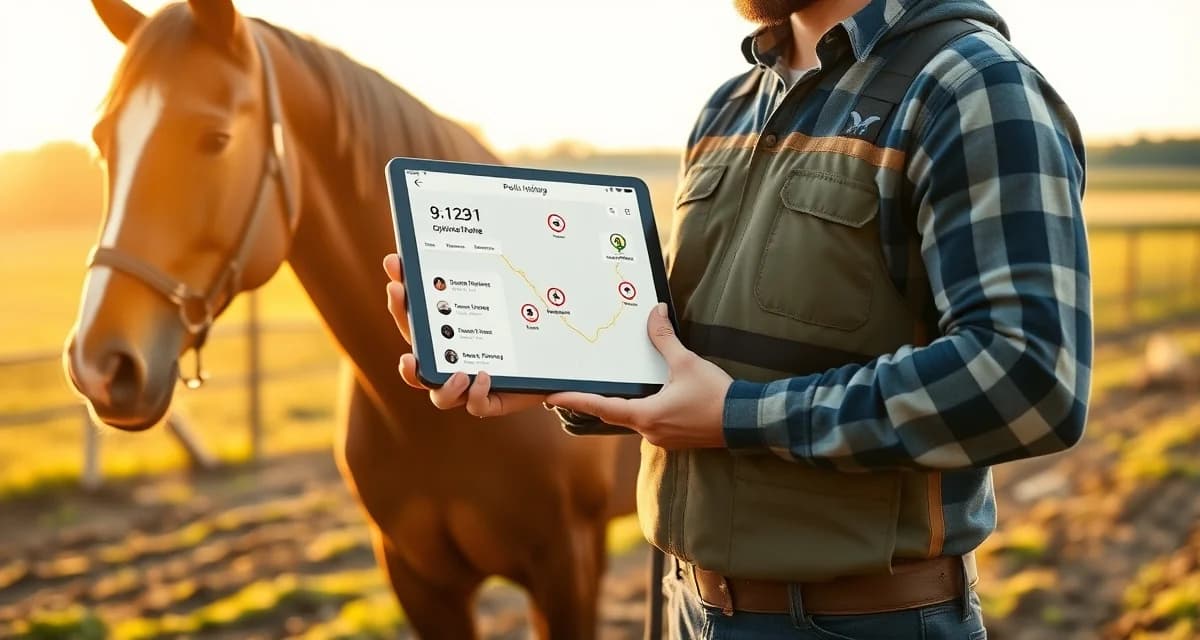
FarrierIQ does this within the app. You open your day, see your optimized route on a map, and tap to start navigation. No spreadsheet. No marker on a paper map. No guesswork.
The app can also factor in horse-specific scheduling intervals, so a horse due for a trim gets slotted on a day when you're already nearby. That's something you simply can't replicate manually across 80+ clients.
Common Mistakes Farriers Make With Route Planning
Letting clients dictate timing completely. Horse owners will always ask for specific days. You can accommodate requests while still protecting your route structure. "I can do Thursday mornings in your area" is a perfectly reasonable answer.
Not adjusting for seasonality. In summer, you might want to start earlier to beat the heat. In winter, road conditions may change your optimal sequence. Your route plan shouldn't be static.
Ignoring drive time between rural stops. Two farms might be only eight miles apart but 25 minutes apart on dirt roads. Distance and time aren't the same thing. Plan for time.
Not revisiting your route plan regularly. Clients come and go. New horses get added. Old ones age out. Review your route clusters every few months to make sure they still make sense.
FAQ
How do farriers plan their daily route?
Most farriers plan their route by reviewing the day's appointments and roughly sequencing them geographically. The more organized approach is to cluster stops by zone, identify the most efficient travel sequence through those zones, and build buffer time into the schedule. Software tools can automate this sequencing based on real addresses and estimated travel times.
What is the most efficient way to schedule farrier stops?
Geographic clustering is the most efficient scheduling method. Group farms that are close to each other on the same day, start with the furthest cluster and work back toward home, and dedicate specific weekdays to specific geographic zones. This reduces backtracking and minimizes total drive time across your week.
Can software automatically optimize a farrier's route?
Yes. Route optimization software takes your appointment locations and builds the most efficient driving sequence automatically. FarrierIQ does this within the scheduling app, generating a mapped route for each day's appointments without any manual planning. It can also factor in horse-specific intervals so new bookings slot into nearby days automatically.
How often should a farrier revisit their route zones?
Most farriers benefit from reviewing their geographic zone assignments every two to three months. Client turnover, new horses being added, and seasonal changes in workload can all shift where your appointments are concentrated. A quick review ensures your clusters still reflect your actual client base rather than where it was six months ago.
How do I handle clients who insist on a specific day that doesn't fit my route?
It helps to frame your scheduling around your zone days when you first onboard a client. Explaining that you work their area on specific days sets expectations early and makes it easier to hold that boundary. For existing clients who request off-route days, you can offer their preferred day at a slightly adjusted rate to account for the extra drive time, or offer the nearest zone day as an alternative.
Does fuel cost savings from route optimization really add up for a solo farrier?
Yes, significantly. The $3,200 annual figure cited in this article reflects combined fuel and time costs across 200 working days. Even cutting unnecessary mileage by 15-20% per day compounds quickly over a full year. For a farrier covering rural areas with long gaps between farms, the savings tend to be even larger than average.
Sources
- American Farriers Journal, Lessiter Media
- American Association of Professional Farriers (AAPF)
- United States Department of Agriculture, National Agricultural Statistics Service (NASS)
- Rutgers Equine Science Center, Rutgers University
- Small Business Administration (SBA), U.S. Small Business Administration
Get Started with FarrierIQ
FarrierIQ handles the route planning work covered in this article automatically, building your optimized daily sequence, accounting for horse-specific trim intervals, and keeping your zone scheduling organized as your client list grows. If you're spending time each morning figuring out the best order to run your stops, that's time FarrierIQ gives back to you. Try it free and see how much ground you can recover in your first week.