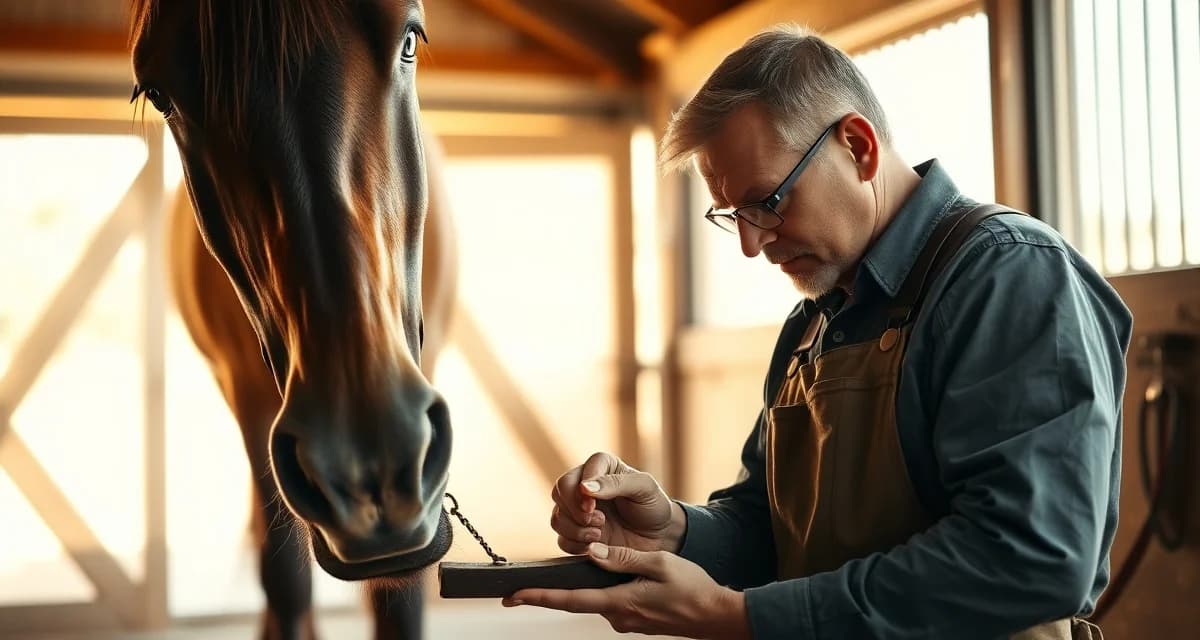
How to Find a Farrier in Texas: Directories Resources and What to Look For
Texas has 3,400+ practicing farriers, but rural coverage gaps leave some areas underserved. Finding the right farrier for your horses - not just any farrier - takes a bit more than a Google search. Here's how to find a qualified professional who'll take your horses seriously and give you the documentation and communication you deserve.
TL;DR
- Texas has 3,400+ practicing farriers, but rural coverage gaps mean availability varies significantly by region.
- Texas does not require farrier licensing, so AFA certification is the only meaningful credential filter when evaluating candidates.
- The AFA Farrier Locator at americanfarriers.org lets you search by zip code for certified farriers near you.
- AFA Journeyman Farrier (JF) is the standard most professional stables and sport horse operations expect, above the entry-level CF designation.
- A professional farrier should invoice the same day, keep per-horse records, and send appointment reminders without you having to track the cycle.
- Equine vets are one of the most reliable referral sources because they work directly with local farriers on corrective and therapeutic cases.
- Farriers who use a professional record system that gives clients direct visibility into shoeing history and upcoming appointments signal a higher standard of practice.
Where Texas Farriers Are Found
AFA Farrier Locator
The American Farriers Association maintains a farrier locator at americanfarriers.org. Search by zip code or state. The directory shows certified farriers - those who've passed AFA testing and maintain their credentials. This is your most reliable first source.
Texas Farrier Association
The Texas Farriery Association (TFA) maintains member directories and can often provide referrals in specific Texas regions. Local and regional associations are a good source for recommendations with peer accountability behind them.
Equine Veterinarians in Your Area
Your vet knows the farriers in the area. Ask them who they recommend and - more usefully - who they work well with on corrective and therapeutic cases. A vet who refers you to a specific farrier is implicitly vouching for that person's professional standards.
Your Barn Manager or Other Horse Owners
The most common way people find farriers is through their barn community. Ask who others use and what their experience has been. Look for consistent, positive responses - not just "he's the only one who returns calls" (a low bar) but "he always documents everything and has caught issues before my vet did."
What Certifications to Look For
AFA Certified Farrier (CF): Entry-level AFA certification. Demonstrates passing scores on written and practical exams.
AFA Journeyman Farrier (JF): Advanced AFA certification with more demanding practical testing requirements. The standard most professional stables and sport horse operations expect.
AFA Therapeutic Endorsement: Additional certification for farriers with advanced skills in therapeutic and corrective shoeing.
Texas doesn't require farrier licensing, which means anyone can call themselves a farrier. Certification is the only meaningful credential filter. An AFA-certified farrier has been tested; an uncertified one hasn't.
Questions to Ask Before Hiring
When you've identified a candidate, ask:
- Are you AFA certified? At what level?
- Do you have liability insurance?
- What's your experience with [your horse's specific breed/discipline]?
- How do you document your visits? Do you keep records per horse?
- What does your invoice include?
- How do you communicate with clients about upcoming appointments?
A professional farrier will answer these questions easily and confidently. Vague answers about insurance or reluctance to discuss their credentials are warning signs.
What to Expect From a Professional Farrier
A professional Texas farrier should:
- Show up at the scheduled time
- Introduce themselves to your horse before starting
- Examine all four hooves before and after work
- Communicate any concerns they observe
- Invoice the same day with a detailed, itemized receipt
- Keep records you can request if needed
- Send appointment reminders so you're not responsible for tracking the cycle
FarrierIQ's horse owner portal allows professional farriers to give you direct access to your horse's records online - shoeing history, photos, upcoming appointments. If a farrier you're considering uses a professional record system that gives you visibility, that's a strong signal of how they operate.
Related Articles
FAQ
What certifications should a Texas farrier have?
At minimum, look for AFA Certified Farrier (CF) status. For horses in active work, performance disciplines, or with any corrective or therapeutic needs, an AFA Journeyman Farrier (JF) is the preferred standard. Texas doesn't require farrier licensing, so AFA certification is the primary indicator of tested competence. A farrier with a Therapeutic Endorsement has additional training for horses with hoof health challenges.
How do I find an AFA-certified farrier in Texas?
Use the AFA Farrier Locator at americanfarriers.org - search by zip code to find certified farriers in your area. The Texas Farriery Association also maintains member directories. Your equine vet is an excellent referral source, as they interact regularly with local farriers and know who does quality work. Your barn manager or other horse owners at your facility are also reliable sources if they have positive long-term relationships with a specific farrier.
What should I ask a farrier before hiring them?
Ask about AFA certification level and whether they carry liability insurance - these are baseline requirements. Ask about experience with your horse's breed and discipline. Ask how they document visits (do they keep records per horse?), what their invoices include, and how they handle appointment reminders. A farrier who has professional systems for documentation and communication is telling you something important about how they'll treat your horses' care.
What does farrier liability insurance cover, and why does it matter?
Farrier liability insurance typically covers property damage and bodily injury that may occur during a visit - for example, if a horse is injured during the shoeing process or equipment damages your property. Because Texas does not license farriers, there is no state-mandated insurance requirement. Asking for proof of coverage before hiring protects you from out-of-pocket costs if something goes wrong, and it signals that the farrier operates as a legitimate business.
How often should a Texas horse be seen by a farrier?
Most horses need farrier attention every 6 to 8 weeks, though the interval depends on hoof growth rate, workload, discipline, and whether the horse is shod or barefoot. Horses in active performance work or with corrective shoeing needs may require more frequent visits. Your farrier should set a recommended schedule at the end of each appointment rather than leaving the timing entirely up to you.
How do I know if a farrier is doing quality work?
Look for even hoof angles, balanced breakover, and shoes that sit flush without gaps. After each visit, your horse should move comfortably and without signs of soreness within a day or two. A quality farrier will also point out any hoof health concerns they observe - white line issues, thrush, or changes in hoof wall integrity - rather than simply completing the job and leaving. Consistent documentation of each visit gives you a record to compare over time.
Sources
- American Farriers Association (AFA) - certification standards, farrier locator, and continuing education requirements
- Texas Farriery Association (TFA) - regional member directory and Texas-specific farrier resources
- American Association of Equine Practitioners (AAEP) - guidelines on hoof care intervals and farrier-veterinarian collaboration
- Texas A&M University College of Veterinary Medicine & Biomedical Sciences - equine hoof health and lameness resources
- Progressive Farrier magazine - industry publication covering farrier business practices, certification, and hoof care standards
Get Started with FarrierIQ
If you've found a farrier who meets the standards covered in this article, FarrierIQ gives them the tools to back it up - per-horse hoof records, same-day invoicing, and a client portal that puts your horse's shoeing history directly in your hands. Try FarrierIQ free and see what working with a professionally organized farrier actually looks like.