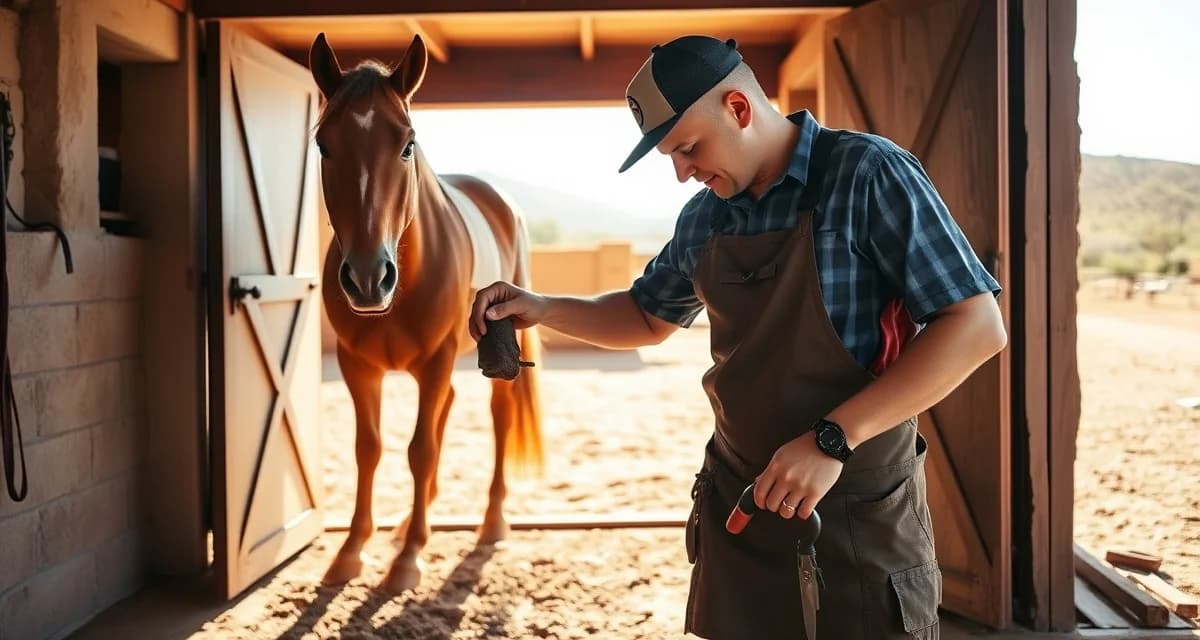
How to Find a Farrier in Arizona: Resources for Southwest Horse Owners
Arizona has one of the highest ratios of horses to farriers in the western US at 340:1. The year-round riding season that attracts horse owners to the Sonoran Desert state also keeps farriers consistently busy, which means established practitioners in Phoenix, Scottsdale, and Tucson often have full books. Finding a qualified farrier in Arizona requires knowing the right resources and understanding which regions have the most constrained supply.
TL;DR
- Arizona has one of the highest horses-to-farriers ratios in the western US at 340:1 -- established practitioners in Phoenix, Scottsdale, and Tucson often have wait lists, especially during the October-April high season when snowbirds bring additional horses to the state.
- Four best search approaches: AFA directory (americanfarriers.org), your barn manager (who knows who is reliable and currently taking clients), your equine vet (who sees farrier work quality directly), and breed/discipline association referral lists.
- Phoenix metro has the most farrier supply concentration: Scottsdale, Cave Creek, Gilbert, Queen Creek, and Chandler all have substantial equestrian communities and active farrier markets.
- Rural Arizona (White Mountains, Arizona Strip, Navajo and Hopi nations, remote Cochise County) has significant horse populations with very limited farrier supply -- some rural Arizona owners drive horses hours to access regular service.
- Arizona credential minimum: AFA Certified Farrier (CF) as baseline; CJF increasingly expected in Scottsdale and Paradise Valley premium markets; CJF with therapeutic endorsement for laminitis cases which are common in the Arizona climate.
- Desert hoof challenges -- drying, cracking, and rapid growth cycles -- require farriers with specific Arizona climate experience, not just general certification.
- Farriers using FarrierIQ's horse owner portal signal professional record-keeping practice; in Arizona's constrained farrier market, documented professionalism is worth prioritizing.
Finding a qualified farrier in Arizona requires knowing the right resources and understanding which regions have the most constrained supply.
Arizona's Horse Country
Phoenix Metro / Maricopa County
The Phoenix metro is Arizona's largest horse market by far. Scottsdale, Cave Creek, Gilbert, Queen Creek, and Chandler all have substantial horse communities. The East Valley's equestrian neighborhoods - particularly in Gilbert and Queen Creek - have grown significantly in recent years. Supply is better in the Phoenix metro than in rural areas but established farriers still have wait lists.
Tucson / Pima County
Tucson has a substantial horse community concentrated in the foothills to the east and northwest of the city. The Oracle corridor and the Sonoran Desert ranch communities around Tucson require farriers comfortable with remote desert property access and offline capability for areas with no cell coverage.
Prescott / Yavapai County
Prescott is one of Arizona's most active equestrian communities, with strong rodeo and western performance horse culture. The Prescott area has reasonable farrier supply relative to its horse population.
Rural and Remote Arizona
Rural Arizona - the White Mountains, the Arizona Strip north of the Grand Canyon, the Navajo and Hopi nations, and remote Cochise County - has significant horse populations with very limited farrier supply. Some rural Arizona horse owners drive horses hours each way to access regular farrier service.
How to Find an Arizona Farrier
American Farrier's Association Directory
Start at americanfarriers.org. Arizona has AFA membership primarily concentrated in the Phoenix and Tucson markets. Use the directory to find credential-verified practitioners in your area.
Your Barn Manager
Arizona boarding barns - particularly in the Scottsdale, Cave Creek, and Queen Creek areas - maintain current farrier relationships. Your barn manager knows who is available, who is reliable, and whose work holds up in Arizona's demanding climate.
Your Equine Vet
Arizona has a strong equine veterinary community in the Phoenix and Tucson areas. Your vet has direct experience with farrier work quality and can recommend practitioners who document properly and coordinate on cases.
Arizona Horsemen's Association and Breed Associations
Arizona's active equestrian community organizations often maintain regional farrier referral lists and can connect you with practitioners who specialize in your horse type and discipline.
FarrierIQ Owner Portal
Arizona farriers using FarrierIQ's horse owner portal can be evaluated professionally before booking. For desert communities where farrier access is limited, a practitioner who maintains complete digital records and communicates professionally is worth prioritizing. Arizona farrier software users signal the organizational professionalism that serious Arizona horse owners appreciate.
Frequently Asked Questions
How do you find a farrier in the Phoenix area?
Phoenix area farrier search starts with the AFA directory filtered to Maricopa County. Then contact your barn manager and equine vet for referrals - the Phoenix equine community is active and well-connected, and insiders know which practitioners are currently accepting new clients. Cave Creek, Scottsdale, and Queen Creek have the most concentrated farrier activity. Expect that established Phoenix-area farriers may have wait lists, particularly in the October-April high season when snowbirds bring additional horses to Arizona. Building a relationship early, before you urgently need service, is the smart approach.
What certifications should an Arizona farrier have?
Arizona horse owners should look for AFA Certified Farrier (CF) as a baseline for established farriers. In the premium Scottsdale and Paradise Valley markets, CJF is increasingly expected for performance horse accounts. For therapeutic work - laminitis management (common in Arizona), navicular, corrective shoeing - look specifically for CJF with therapeutic endorsement. Arizona's climate creates specific hoof challenges - hoof drying, cracking, and rapid growth cycles - and experienced Arizona farriers who understand desert hoof management are worth the extra credential scrutiny.
Is there a farrier directory for Tucson and Scottsdale AZ?
The AFA directory covers both Tucson and Scottsdale. The Southern Arizona Horse Council maintains contacts for the Tucson region. For Scottsdale specifically, the active equestrian community around Westworld and the North Scottsdale equestrian neighborhoods has an informal but effective referral network through barn managers and trainers at the facilities there. Ask multiple people -- trainers, vets, and barn managers at different facilities -- for recommendations and identify who appears consistently in multiple recommendations, as this is typically a strong signal of quality and reliability in Arizona's competitive horse care market.
What questions should an Arizona horse owner ask when interviewing a farrier for the first time?
Ask about their Arizona-specific experience: how long have they worked in the desert climate, how do they approach the hoof drying and cracking that's common in summer and in the low-humidity winter months, and what do they recommend for moisture management between visits. Ask about their scheduling approach: are they currently taking new clients, what is their standard interval for a horse like yours, and how far in advance do they typically book? Ask about credentials: AFA certification level, any therapeutic training if your horse has specific needs. Ask about their records system: do they maintain documented visit notes and photos for each horse? A farrier who can answer all of these questions specifically and confidently is a farrier who has thought carefully about their practice. One who deflects or gives vague answers to basic professional questions is a risk in Arizona's constrained market where finding a replacement is not easy.
How should an Arizona horse owner evaluate whether their current farrier is managing desert hoof conditions appropriately?
Look for three things across your visit history: Does the farrier examine and comment on hoof wall moisture and condition at each visit, or do they trim without assessing? Does the farrier proactively adjust the interval when spring or fall growth changes -- Arizona hooves often grow faster during cooler months and slower in the peak summer heat? Do they provide specific guidance on moisture management products and practices for Arizona's dry climate, or do they give generic advice that doesn't account for desert conditions? A farrier who is managing your horse's hooves well in Arizona should be discussing these factors as a routine part of each visit. If you've never had a conversation about desert hoof management with your current farrier, that's a gap worth addressing directly.
Sources
- American Farrier's Association (AFA), farrier directory and credential verification
- Arizona Horse Council, Arizona equine industry resources and farrier referrals
- Southern Arizona Horse Council, Tucson region equine community resources
- American Association of Equine Practitioners (AAEP), equine veterinarian directory for Arizona
Get Started with FarrierIQ
Arizona farriers using FarrierIQ maintain complete digital hoof records accessible through the horse owner portal -- giving Arizona horse owners visibility into their horse's condition, photos, and visit history rather than relying on verbal updates. For farriers serving Arizona's desert horse market, farrier software for Arizona with offline capability handles the remote ranch and mountain community routes where cell coverage is unreliable. Learn more about what professional record-keeping looks like in an active Arizona farrier practice.