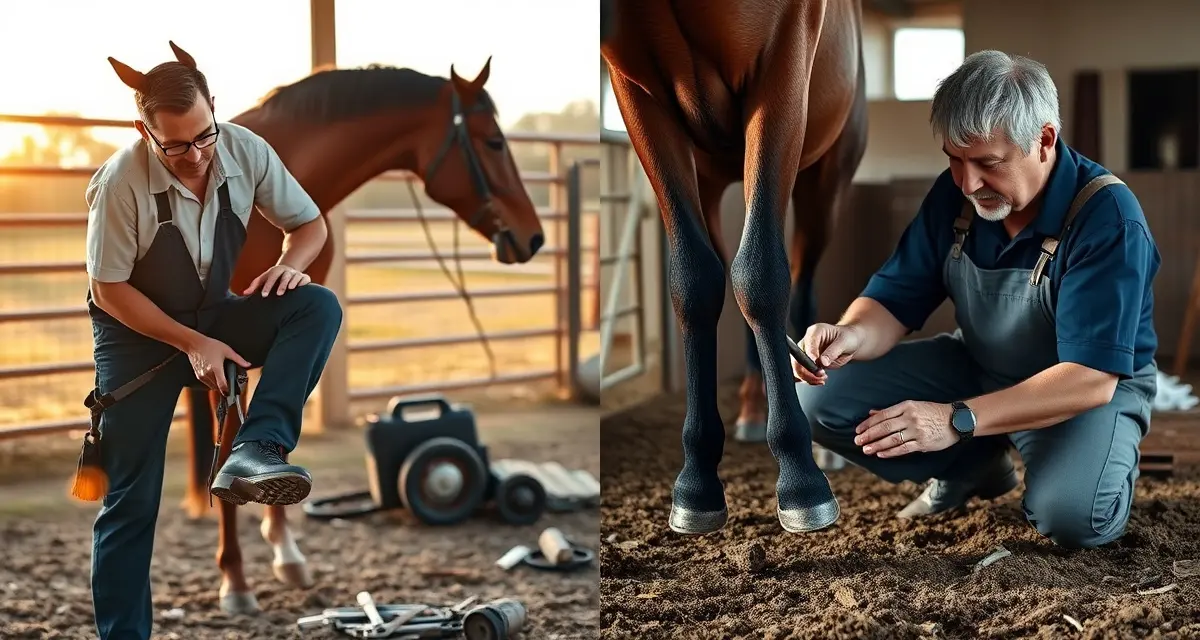
Farrier vs Trimmer: What's the Difference?
Barefoot trimming has grown approximately 28% in popularity over the past decade as an alternative to traditional shoeing.
TL;DR
- The core difference: a farrier is trained in both trimming and shoeing; a barefoot trimmer is trained specifically in maintaining horses without shoes and cannot apply shoes.
- Barefoot trimming has grown 28% in popularity over the past decade, creating more horse owners who face this choice.
- For trimming-only services, pricing is comparable: a barefoot trim and a farrier trim both typically run $40-75 in most markets -- the cost difference appears when shoes are needed.
- A farrier is the more flexible choice if there's any chance the horse will eventually need shoes: they can handle any hoof situation from barefoot maintenance to therapeutic corrective shoeing.
- Choose a trimmer when: the horse is a confirmed barefoot horse on appropriate terrain and management, and never needs shoes.
- Choose a farrier when: the horse needs shoes, may need shoes in the future, or has therapeutic needs that may require remedial shoeing.
- FarrierIQ's scheduling and record system works equally well for barefoot trimmers and shoeing farriers -- the shoe-specific record fields can be ignored for a barefoot-only practice. With that growth has come some confusion about who does what and when each approach is appropriate for your horse.
The short answer: a farrier shoes horses. A trimmer does barefoot trimming only. Understanding when each is right for your horse is the practical question that matters.
What a Farrier Does
A farrier is trained in both trimming and shoeing. Their core skill set includes hoof assessment, trimming for balance, shoe selection and fitting, nail placement, and working with veterinarians on therapeutic cases.
Farriers can work with barefoot horses, applying trim work appropriate for a horse being maintained without shoes. Many farriers also have specific training in natural hoof care principles. But the farrier's training includes shoeing, which gives them the ability to serve horses across the full spectrum from barefoot to specialty therapeutic shoeing.
When your horse needs shoes for their work, terrain, or hoof health, you need a farrier.
What a Barefoot Trimmer Does
A barefoot trimmer is trained specifically in maintaining horses without shoes. Their approach typically emphasizes the natural mechanics of the unshod foot, including the frog's role in shock absorption, the importance of full ground contact for the back of the foot, and the hoof's ability to self-regulate when properly trimmed and managed.
Barefoot trimmers may have completed programs through organizations like the American Hoof Association, the Natural Hoof Care Practitioners Association, or other certification bodies. Their training is specifically focused on barefoot hoof care rather than the full shoeing curriculum of farrier schools.
Cost Comparison
In most markets, barefoot trimming and standard farrier trimming are priced similarly. A barefoot trim typically runs $40-75, comparable to a farrier trim. The cost difference between the approaches becomes apparent when your horse needs shoes: a farrier can shoe them, a trimmer cannot.
Some specialized natural hoof care practitioners charge more for their services due to their specific training and approach. These rates vary by practitioner and region.
When a Horse Should See a Farrier vs. a Trimmer
Choose a farrier when:
- Your horse needs shoes for their terrain or discipline
- You're dealing with a therapeutic hoof condition that may require remedial shoeing
- Your horse has been shod and needs transition management as part of a shoeing change
- You want one professional who can handle any situation that develops
Choose a barefoot trimmer when:
- Your horse is a confirmed barefoot horse on appropriate terrain and management
- Your trimmer's specific natural hoof care philosophy aligns with your management approach
- Your horse never needs shoes and performs well barefoot year-round
Either may work when:
- Your horse does light trail or pleasure work on moderate terrain
- The horse's hoof condition is healthy and maintenance is straightforward
- You've assessed both options for your specific horse and environment
Can FarrierIQ Be Used by Barefoot Trimmers?
Yes. FarrierIQ's scheduling software is designed for any professional providing regular hoof care services, including barefoot trimmers who manage a book of barefoot horses on a consistent trim schedule. The scheduling, client communication, records, and invoicing features work the same way for a trimmer as for a shoeing farrier.
The record fields that apply to shoeing can be ignored for a barefoot-only practice, and the hoof condition records are equally useful whether you're noting the condition of a shod or unshod hoof.
The Barefoot Versus Shod Debate
The question of whether any given horse should be barefoot or shod depends on the individual horse. Their hoof quality, their terrain, their workload, and their management all factor in. Neither approach is universally superior.
Horses with naturally hard, well-conformed hooves on appropriate terrain can often perform well barefoot. Horses doing demanding athletic work on abrasive terrain, or those with hoof conditions that require protection, typically need shoes for at least some of their work.
Frequently Asked Questions
When should a horse see a farrier instead of a trimmer?
Whenever the horse needs shoes for their terrain, discipline, or hoof health. Also when therapeutic or remedial shoeing is indicated by a veterinarian. A farrier can always provide barefoot trimming service as well, which makes a farrier the more flexible choice if there's any chance the horse will eventually need shoes.
Is a farrier more expensive than a trimmer?
For trimming-only services, the rates are similar in most markets. The cost difference comes with shoeing, which a trimmer cannot provide. If your horse is fully managed barefoot and never needs shoes, the pricing is comparable. If your horse might ever need shoes, a farrier is the practical choice.
Can FarrierIQ be used by barefoot trimmers?
Yes. FarrierIQ works for any professional providing scheduled hoof care services. Barefoot trimmers use the same scheduling, records, invoicing, and client communication features that shoeing farriers use. The platform is built for professional hoof care rather than specifically for shoeing.
How should a horse owner transition from a barefoot trimmer to a farrier if their horse needs shoes?
The transition should include a record transfer: ask your trimmer for notes on the horse's hoof history, trim angles, and any conditions observed over their time with the horse. Provide these to the farrier at the first appointment so the new professional has context rather than starting blind. The farrier will do their own assessment, but prior records -- particularly if the horse has any existing hoof conditions, tendency toward thrush, or balance quirks -- prevent the first few visits from being purely discovery appointments. A good barefoot trimmer will have these records available; a good farrier will ask for them.
When is it appropriate for a farrier to recommend barefoot management to a horse owner currently using shoes?
When the horse's hoof quality, terrain, workload, and management all support it. Farriers who are honest with clients about barefoot viability build more trust than those who recommend shoes by default. The appropriate conversation: "Based on what I've seen over the last few visits, [Horse] has the hoof quality and workload that might support going barefoot. The main factors are your terrain and riding frequency -- if you're on soft ground and riding light, it's worth a trial. If the terrain gets harder or the work increases, we can revisit shoes." Document the recommendation and the client's decision in FarrierIQ's hoof health records so the reasoning is on record if the horse's needs change later.
Sources
- American Farrier's Association (AFA), farrier training standards and scope of practice
- American Hoof Association (AHA), barefoot trimmer certification standards
- Natural Hoof Care Practitioners Association, barefoot trimming education and professional standards
- American Association of Equine Practitioners (AAEP), equine hoof care professional recommendations