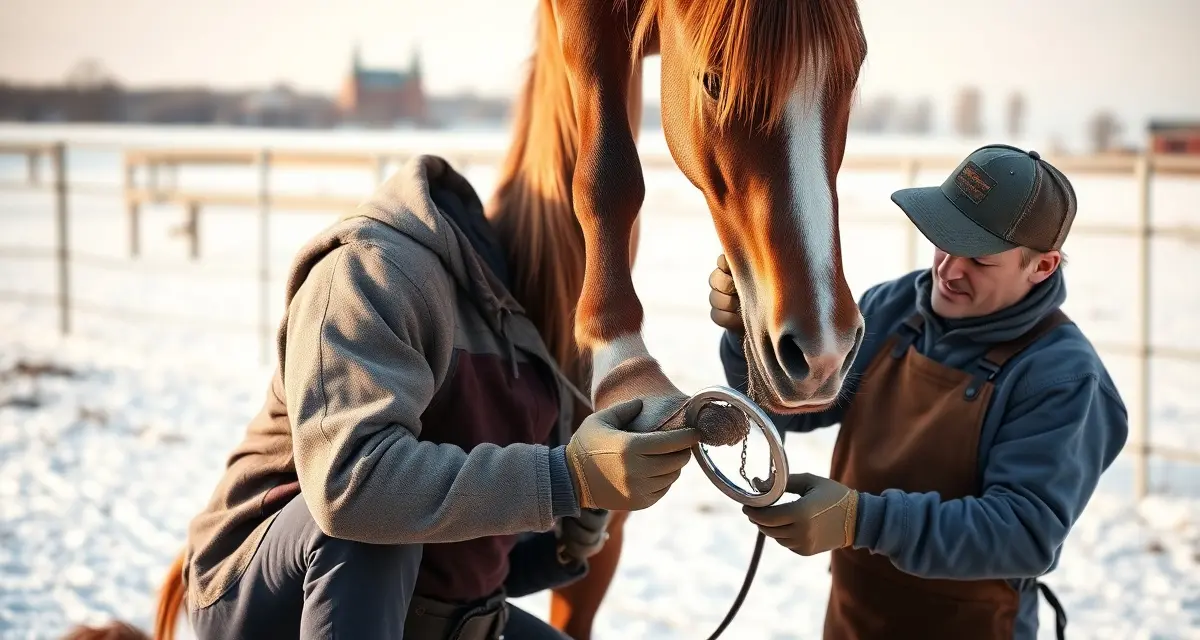
Farrier Scheduling Software for North Dakota: Oil Country and Ranch Routes
North Dakota's horse population has grown 11% since 2015, driven in part by rural property purchases tied to the energy sector's expansion across western and central North Dakota.
TL;DR
- North Dakota's horse population has grown 11% since 2015 as energy sector expansion drove rural property purchases in Dunn and McKenzie counties -- the resulting farrier market mixes established multigenerational ranch operators who need minimal communication with newer horse owners who need more structure and guidance.
- North Dakota is sparse farrier country with low competition and real demand -- a farrier willing to operate efficiently has genuine opportunity, but low density means a Bismarck-based farrier serving clients west toward Dickinson and south toward Linton covers enormous geographic territory every week.
- Route optimization is not optional in North Dakota -- it is what makes the math of long-distance ranch routes economically viable rather than exhausting.
- North Dakota winters are extreme; seasonal interval adjustment per horse and winter shoe configuration documentation (borium, snow pads) are essential for maintaining accurate records through January and February.
- New horse owners in the energy corridor are often unfamiliar with farrier scheduling norms -- automated reminders that explain appointment windows build client confidence before any problems arise.
- Experienced ranch operators want a farrier who shows up on time and handles horses competently without requiring direction; automated reminders serve as a professional light-touch confirmation rather than hand-holding.
- North Dakota farriers using FarrierIQ build sustainable practices through route optimization, overdue tracking for proactive outreach, and seasonal scheduling tools that handle the state's extreme winter conditions. That growth has created an interesting farrier market: established ranch horse clients who've been in the same families for generations alongside relatively new horse owners who bought rural property in Dunn County or McKenzie County and decided they wanted horses.
For a North Dakota farrier, this means a client base that spans the full range from experienced ranch operators who barely need reminders to newer horse owners who benefit from more hands-on communication and guidance. FarrierIQ's scheduling tools handle both, automated reminders for clients who need them, practical route planning for a state where drives between clients are long, and the organizational foundation for building a sustainable North Dakota practice.
North Dakota's Farrier Market: Unique and Underserved
North Dakota is sparse farrier country. The state's low horse population density means farriers here often cover enormous territories compared to counterparts in states like Kentucky or Texas. For a farrier willing to operate efficiently, this creates genuine opportunity, there's less competition and real demand from a growing horse owner population.
The challenge is that low population density means long drives. A North Dakota farrier in Bismarck serving ranch clients west toward Dickinson and south toward Linton is covering a wide geographic spread on every working week.
Route optimization isn't optional in North Dakota, it's what makes the math work. FarrierIQ's clustering tools minimize the backtracking that inflates already-long North Dakota routes, sequencing your stops based on actual road distances and geographic proximity.
Building a Farrier Client Base in North Dakota
For farriers growing in North Dakota, the path to a sustainable client base involves the same fundamentals as anywhere, but the distances make every inefficiency more costly.
FarrierIQ's farrier business growth tools include overdue tracking and proactive outreach features that are especially valuable in a growth phase. When you're trying to build from 30 horses to 60, staying on top of every client's service window, and proactively reaching out when it's time, builds the reputation for reliability that generates referrals in close-knit rural communities.
North Dakota's new horse owner population, particularly in the energy-sector-growth counties, tends to be less experienced with establishing farrier relationships. These clients benefit from the communication structure that FarrierIQ's reminder and outreach tools provide, regular, professional contact that builds confidence in the farrier relationship before any problems arise.
Serving Both Ranch Veterans and New Horse Owners
Experienced North Dakota ranch operators want a farrier who shows up on time, does quality work, and doesn't need a lot of direction. They don't want to be managed, they want a professional who handles their horses competently and records the work.
New horse owners in the energy corridor need more structure. They may not know when to schedule a farrier, may not understand interval requirements, and may be less reliable about responding to scheduling prompts without clear reminders.
FarrierIQ handles both client types in the same system. For experienced ranch operators, the automated reminders are a light professional touch, confirming the appointment without requiring their active engagement. For newer horse owners, those reminders are genuinely helpful orientation to how farrier scheduling works.
Winter Scheduling in North Dakota
North Dakota winters are extreme. Scheduling farrier work in January and February requires different planning than the rest of the year. Some clients reduce horses' activity and want stretched intervals. Others maintain horses in heated indoor facilities and need normal schedules.
FarrierIQ's seasonal interval adjustment lets you modify individual horse schedules for winter without losing the baseline configuration. Document winter shoe configurations, borium, snow pads, per horse. Adjust outreach timing for clients who are harder to reach in winter.
Related Articles
- Farrier Scheduling Software for Illinois: Prairie Routes and Urban Stables
- Farrier Scheduling Software for Iowa: Farm Country Efficiency
- Farrier Scheduling Software for Louisiana: Bayou Country Horse Care
FAQ
How do I build a farrier client base in North Dakota?
In North Dakota's sparse market, referrals matter more than advertising. The farrier who serves clients reliably, communicates proactively, and maintains clean records builds reputation fast in rural communities where word travels quickly. FarrierIQ's farrier business growth tools support this through overdue tracking that keeps you proactively reaching out, automated reminders that signal professionalism, and service records that document your work consistently.
What farrier software works in North Dakota's remote areas?
FarrierIQ's offline mode is essential for North Dakota's remote ranch territory. All horse records, schedules, and service note capability work without internet connectivity. The app syncs when you reconnect. For North Dakota farriers working in areas where cell coverage disappears between towns, particularly in the western counties, offline functionality is what makes mobile scheduling software usable in the field.
Does FarrierIQ handle scheduling for North Dakota's rural ranches?
Yes. FarrierIQ's combination of farm-level scheduling for multi-horse ranch visits, route optimization for long rural drives, and offline functionality for remote properties makes it well-suited to North Dakota's ranch farrier market. The scheduling tools handle both the established ranch operators and the newer horse owners entering the market in the energy-sector growth counties.
How should North Dakota farriers document winter shoe configurations for ranch horses?
North Dakota ranch horses working through winter conditions -- ice, packed snow, hard frozen ground -- often need borium applications, snow pads, or stud configurations that differ from their summer setup. Per-horse winter shoe documentation should note: borium placement and application pattern (toe, heel, both), snow pad type if used (full pad, bubble pad), any stud configuration, and the specific date the winter setup was installed. This record serves two purposes: it gives you the reference in spring when restoring each horse's standard configuration, and it gives the ranch owner documentation of what was done during winter if any ice-related soundness question arises. For ranch operations with 6-12 horses all receiving winter configurations on the same visit, having the individual records accessible per animal is significantly more reliable than trying to recall which horse got what treatment months later.
What pricing structure works for North Dakota's long-distance ranch routes?
North Dakota farriers serving the western oil country and central ranch territory face drive times that make per-stop pricing without travel fees unsustainable. The most common approach is a zone-based travel fee structure: a flat rate for stops within a set radius of the farrier's base, with a per-mile or flat zone fee for stops beyond that. For ranch clients with multiple horses, bundling the travel fee into the overall visit cost (rather than adding it per horse) is the standard expectation -- ranch operators know the farrier is driving a long way and account for it, but they expect one travel charge per farm visit, not per animal. Communicating this structure clearly in writing when establishing new accounts prevents the billing friction that arises from ambiguous expectations in a market where drive time can represent 30-40% of a day's working hours.
Sources
- American Farrier's Association (AFA), North Dakota member directory and credential information
- North Dakota Department of Agriculture, North Dakota equine industry resources
- American Association of Equine Practitioners (AAEP), equine veterinarian directory for North Dakota
- North Dakota State University Extension, equine resources for North Dakota agricultural communities
Get Started with FarrierIQ
North Dakota farriers managing long-distance ranch routes, newer energy-corridor horse owners, and extreme winter scheduling use FarrierIQ's route optimization, seasonal interval adjustment, and overdue tracking to build sustainable practices in one of the country's most sparsely populated farrier markets. For farriers serving North Dakota's ranch and agricultural horse community, farrier software for North Dakota provides the scheduling and operational tools that professional practice in the Peace Garden State requires.