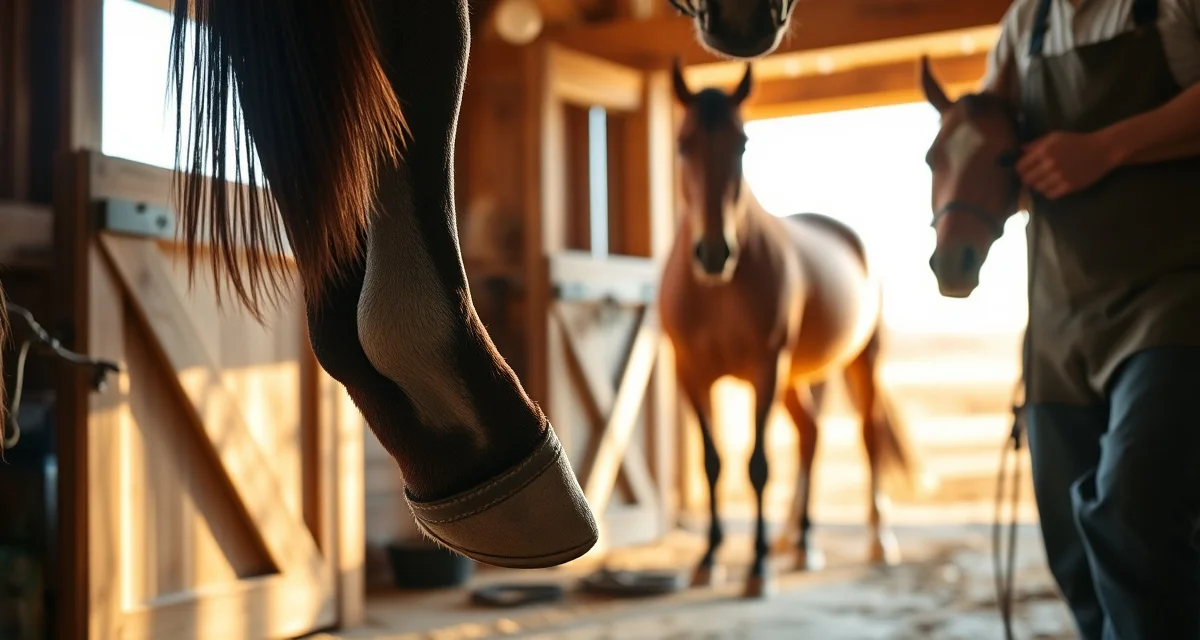
Farrier Scheduling Software for Nebraska: Cornhusker Ranch Routes
Nebraska's average distance between consecutive farrier stops is 12.3 miles, above the national average, and that number reflects only averages.
TL;DR
- Nebraska's average distance between consecutive farrier stops is 12.3 miles above the national average -- farriers in the Sand Hills (Cherry, Hooker, Thomas counties) see consecutive stops 20-30 miles apart across terrain that follows lakes and gravel roads rather than a logical grid.
- The difference between an optimized and unoptimized Nebraska route can easily be 30-50 miles per week -- HoofBoss provides no route optimization for these long rural drives; FarrierIQ calculates the most efficient sequence from actual road distances, not straight-line estimates.
- Nebraska's natural farm clusters (O'Neill area ranches, Broken Bow farms, Platte River valley corridor between Grand Island and Kearney) are the practical building blocks for weekly route planning -- mixing clusters on the same day adds unnecessary drive time.
- Family farms with 4-6 working horses and ranch operations with 8-12 animals are common in Nebraska's agricultural context -- FarrierIQ groups all horses at a property under one visit block with individual records per animal.
- Overdue tracking surfaces horses approaching or past their service window automatically -- in a spread-out 70-80 client territory, horses can drift 10+ weeks past service when neither the ranch owner nor the farrier initiates contact.
- Nebraska's Sand Hills and Panhandle have variable cell coverage -- offline mobile capability ensures field functionality in areas without reliable signal.
- Nebraska farriers using FarrierIQ combine cluster-based route optimization, farm-level scheduling, and automated overdue tracking to serve more horses per week across the state's vast agricultural territory. Farriers working the Sand Hills or the Panhandle see distances considerably larger. The state's vast agricultural landscape means horse properties are spread across sparse farm clusters connected by county highways and gravel roads.
For Nebraska farriers, route inefficiency isn't an abstract concern, it's a daily fuel bill and a limiting factor on how many clients you can reasonably serve. HoofBoss provides no route optimization for the long rural drives that characterize Nebraska farrier work. FarrierIQ's route optimization is built for exactly these conditions: sparse stops, real distances, actual road routing rather than straight-line estimates.
Nebraska's Rural Distance Problem
A Nebraska farrier covering the Sand Hills, Cherry County, Hooker County, Thomas County, isn't optimizing a suburban route. Ranches can be 20 or 30 miles apart. The road network in the Sand Hills follows terrain rather than a logical grid. What looks like a short distance on a map can involve a notable detour around a lake or through a series of gravel roads.
FarrierIQ's routing calculates the most efficient sequence based on actual road distances between your client addresses. The algorithm clusters nearby stops into logical blocks and sequences those blocks to minimize the total drive across your territory.
A Nebraska farrier in the Sand Hills who runs FarrierIQ's route optimization on their existing client list often discovers that their current sequence has inefficiencies they'd never noticed, crossings they could eliminate, clusters they could visit together rather than split across two days. The savings on a Nebraska route can be substantial.
Clustering Sparse Ranch Stops
Nebraska's farm clusters are natural route-building blocks. The ranch properties around O'Neill are one cluster. The farms near Broken Bow are another. The ranches in the Platte River valley between Grand Island and Kearney form a corridor.
When you build routes around these natural clusters rather than booking clients in whatever order they appear on your call list, the efficiency gains are immediate. FarrierIQ's route tools identify these clusters from your client addresses automatically and suggest daily assignments that keep travel within geographic blocks.
For Nebraska farriers who cover multiple counties, this cluster-based routing is the difference between a manageable day and an exhausting one. Driving 15 miles between consecutive stops is normal in Nebraska. Driving 40 miles between stops because the sequence isn't optimized is the kind of inefficiency that compounds painfully across a week.
Multi-Horse Farm Scheduling for Nebraska Agriculture
Nebraska's agricultural context means farrier clients often have multiple horses. Family farms with 4-6 working horses. Ranch operations with 8-12 animals. Scheduling these as individual appointments misses how the work actually happens, you arrive at a farm and work through the herd.
FarrierIQ's farm-level scheduling groups all horses at a property under one visit block, with individual records maintained per animal. You see the whole farm at a glance when you pull up the appointment, with each horse's service history accessible one tap deeper.
FarrierIQ's route optimization tools combine this farm-level scheduling with geographic clustering, so you're not just booking farms, you're booking farms in the right order.
Overdue Tracking Across a Spread-Out Client Base
When your clients are spread across a large Nebraska territory, it's easy for horses to drift past their service window without anyone noticing. The ranch owner assumes you'll reach out when it's time. You assume they'll call when they're ready. The horse is now 10 weeks out from its last service.
FarrierIQ's overdue tracking surfaces these gaps automatically. The system flags horses approaching or past their interval so you can reach out before the gap becomes a problem. For Nebraska farriers with 70 or 80 clients across multiple counties, this kind of automated monitoring is what prevents horses from falling through the cracks in a spread-out rural client base.
Related Articles
- Farrier Scheduling Software for Nevada: Desert Routes and Horse Community Hubs
- Farrier Scheduling Software for South Dakota: Prairie Routes and Rodeo Country
- Farrier Scheduling Software for Alabama: Southeastern Horse Country
FAQ
How do I route a farrier schedule in rural Nebraska?
Start with geographic clustering, identify which of your Nebraska clients are in the same general area and build daily routes within those clusters rather than routing across the state. FarrierIQ's route optimization does this automatically from your client addresses, calculating the most efficient sequence based on actual road distances. For Nebraska's sparse rural territory, the difference between an optimized and unoptimized route can easily be 30-50 miles per week.
What farrier software works best for Nebraska's farming community?
FarrierIQ is well-suited for Nebraska's agricultural farrier client base. Its route optimization handles the long rural distances that define Nebraska routes. Its farm-level scheduling manages the multi-horse visit blocks common in agricultural settings. And its overdue tracking keeps spread-out rural clients from drifting past their service windows without notice. See FarrierIQ's route optimization for more details.
Does FarrierIQ handle long drives between Nebraska ranches?
Yes. FarrierIQ's route optimization is specifically designed for rural scheduling challenges like Nebraska's long-drive territory. It sequences stops based on actual road-distance clustering, minimizing backtracking across sparse ranch country. For Nebraska farriers where drive time is the primary constraint on daily capacity, this optimization directly affects how many horses you can serve per week.
How should Nebraska farriers communicate travel fees to ranch clients?
Nebraska's long-drive territory makes travel fee structure one of the most important business decisions a farrier makes. The two most common approaches are a per-mile rate above a radius threshold (e.g., no charge for stops within 25 miles, $0.75-1.00/mile beyond that) and a flat zone fee structure (a fixed fee for Sand Hills stops, a different fixed fee for Panhandle stops). Ranch clients in agricultural Nebraska tend to prefer the flat zone fee because it is predictable -- they know what a visit costs before they schedule. Per-mile rates create uncertainty that some clients find uncomfortable. Whatever structure you use, communicating it in writing and including it on invoices prevents the disputes that arise when clients assume travel is included and farriers assume it is not. FarrierIQ's invoicing tools let you set travel fee structures per client that apply automatically to each invoice.
What winter scheduling approach works for Nebraska ranch clients on extended intervals?
Nebraska winters -- particularly in the Panhandle and Sand Hills where blizzard conditions can close county roads for days -- require advance planning for horses that need service during January and February. The most practical approach is identifying which ranch clients are at weather access risk and scheduling their November or December visit with a slightly longer planned interval (8-10 weeks instead of 6-8), positioning the horse to carry through to March if a winter access problem occurs. For horses with hoof health conditions where extended intervals carry real risk, having that conversation explicitly in fall ("if February access is impossible, here is the plan") prevents the client from simply assuming you will figure it out. FarrierIQ's scheduling tools let you set individual horse intervals and flag notes on each client profile, keeping winter planning information accessible when you are scheduling the next round of visits in January.
Sources
- American Farrier's Association (AFA), Nebraska member directory and credential information
- Nebraska Horse Council, Nebraska equine industry resources and regional contacts
- American Association of Equine Practitioners (AAEP), equine veterinarian directory for Nebraska
- University of Nebraska-Lincoln Extension, equine resources for Nebraska agricultural communities
Get Started with FarrierIQ
Nebraska farriers managing long-distance Sand Hills routes, Platte River valley farm clusters, and Panhandle ranch accounts use FarrierIQ's cluster-based route optimization, farm-level multi-horse scheduling, and automated overdue tracking to serve more clients across the Cornhusker State's vast agricultural territory. For farriers serving Nebraska's ranch and farming horse community, farrier software for Nebraska provides the scheduling and route planning tools that professional practice in the Great Plains requires.