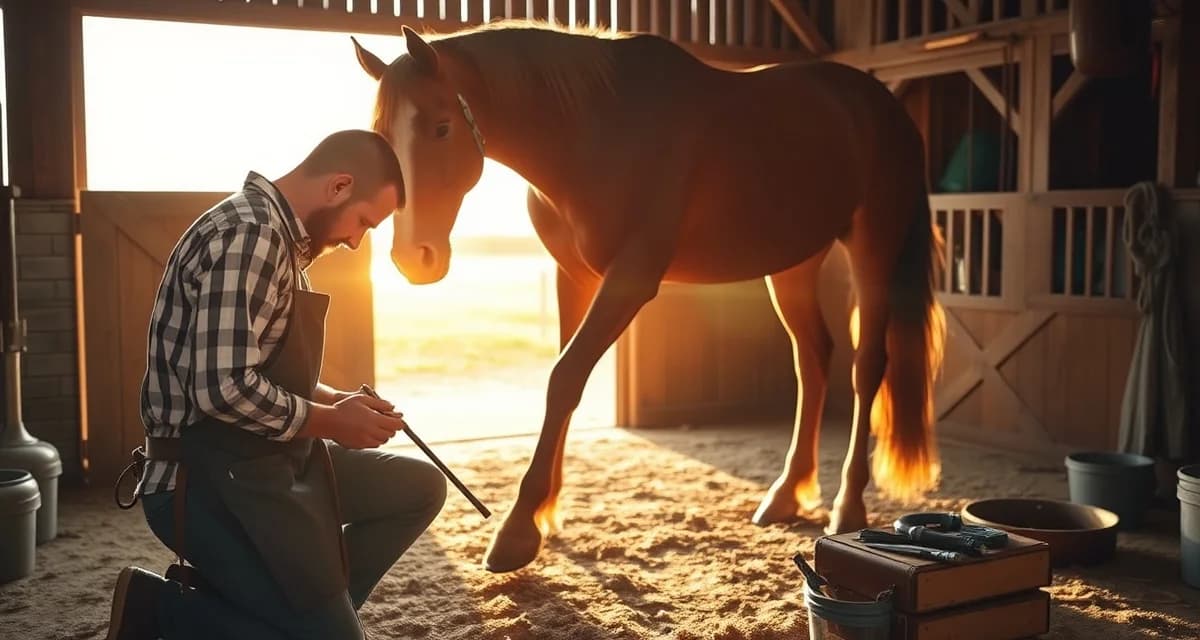
Farrier Scheduling Software for Iowa: Farm Country Efficiency
Iowa's average farm horse herd size is 8.4 horses -- 40% above the national average. That number shapes everything about how Iowa farriers work. You're not booking individual horses one by one the way an urban boarding barn farrier would. You're booking farms, planning blocks of time, and managing multiple animals at a single location in a single visit.
Generic scheduling tools don't account for this. They're built for the single-horse booking model. FarrierIQ's multi-horse farm management handles Iowa's herd-heavy client base efficiently, grouping horses by farm, managing herd-wide appointment blocks, and tracking each animal individually within the group.
TL;DR
- Iowa's average farm horse herd size is 8.4 horses -- 40% above the national average -- which means Iowa farriers book farms, not individual horses, and a single farm visit of 8 horses takes 4-6 hours of scheduled time with precise coordination required.
- When a farm with 8 horses cancels, that's a half-day of schedule gone, not an hour -- automated reminders that confirm farm visits 48 hours in advance reduce the large-block no-show risk that hits Iowa farriers harder than urban booking farriers.
- FarrierIQ groups horses by farm for scheduling (one appointment block per farm visit) while maintaining individual records for every horse within the group -- the farm-level view matches how Iowa farm work actually happens.
- Arriving at a farm you haven't visited in 7 weeks and having full context on all 8 horses -- which one was on a 5-week corrective protocol, which was the retired horse on minimal care, which had the cracked heel -- is what per-horse records within farm groups provide.
- Iowa farm clients who run large agricultural operations expect clean, itemized digital invoices that simplify their own recordkeeping -- single-farm invoices itemized per horse or summarized as a farm charge are both practical options.
- Route optimization at the farm level clusters large farm blocks geographically so Iowa farriers move across the rural landscape in one direction rather than backtracking between distant farm stops.
- Iowa farriers using FarrierIQ manage 10-12 farms with 8+ horses each in an organized system that scales with client list growth rather than becoming harder to manage as the book grows.
The Iowa Farrier Scheduling Challenge
When your average client has 8 or 9 horses, a few things change about how you manage your schedule.
First, the time blocks are longer. A farm visit with 8 horses takes 4-6 hours. Scheduling precision matters more, clients need to plan their day around having the horses available and someone present. A vague "sometime Tuesday" doesn't work when the barn owner needs to arrange for help catching and holding horses.
Second, the records complexity multiplies. Each horse has its own service history, interval, and notes. Eight horses per farm means eight separate records per visit. If you're managing that manually, it becomes impractical fast, especially when you're serving 10 or 12 farms.
Third, the no-show impact is larger. When a client cancels or is unreachable on a farm with 8 horses, that's a half-day of your schedule gone. Not an hour, a half-day.
FarrierIQ handles all three challenges directly.
Farm-Level Scheduling in FarrierIQ
In FarrierIQ, you can group horses by farm and schedule them as a block. One appointment entry covers the whole farm visit, with individual horse records accessible within that block. When you pull up a farm in the app, you see every horse at that property, their last service dates, and any notes from previous visits.
This is fundamentally different from booking each horse as a separate appointment. For Iowa's farm-heavy client base, the farm-level view is how the actual work happens.
Route optimization works at the farm level too. FarrierIQ clusters your farm visits geographically, minimizing the drive between large farm blocks. Iowa's township roads connect farms in patterns that aren't always obvious, the routing tools find the efficient sequence rather than leaving you to figure it out manually.
Managing Individual Records Within a Herd
Even on a farm with 8 horses, each animal has its own needs. One horse might be on a 5-week cycle due to active competition. Another might have a corrective shoeing protocol. A third might be a retired horse on minimal care.
FarrierIQ stores individual records for every horse within every farm. You can see the whole herd at a glance, then drill into any individual animal for the detail you need. Service notes, shoe type, corrective instructions, vet coordination notes, all per horse, all attached to the farm profile.
When you arrive at a farm you haven't visited in 7 weeks, you walk in with full context on all 8 horses. No notebook to flip through, no trying to remember which horse had the cracked heel. It's all in your phone.
Invoicing Iowa Farm Clients
Large farm visits mean larger invoices. FarrierIQ's invoicing tools let you generate a single invoice for a multi-horse farm visit, itemized by horse if the client wants that breakdown, or summarized as a single farm charge.
For Iowa farm clients who run large operations, particularly those managing horses as part of an agricultural business, the ability to receive a clean, itemized digital invoice matters. It simplifies their recordkeeping and makes payment faster.
See FarrierIQ's route optimization tools for more on how to build efficient Iowa farm routes.
Related Articles
- Farrier Scheduling Software for South Dakota: Prairie Routes and Rodeo Country
- Farrier Scheduling Software for Utah: Mormon Flat Country to Mountain Pastures
- Farrier Scheduling Software for Wisconsin: Dairy Country and Horse Country Together
FAQ
How do I schedule farrier visits for large horse farms in Iowa?
FarrierIQ's farm-level scheduling groups all horses at a property under one appointment block, while maintaining individual records for each animal. This matches how Iowa farm visits actually work, you're booking a block of time at a farm, not individual animals one by one. The routing tools then cluster your farm visits geographically so you're moving efficiently across Iowa's rural landscape.
Does farrier software handle multiple horses at the same farm?
Yes. FarrierIQ is specifically designed for multi-horse farm management. It groups horses by farm location, lets you schedule farm visits as blocks, and maintains individual horse records, service history, intervals, notes, within each farm profile. It's a much more practical approach for Iowa's farm-heavy farrier client base than single-booking tools built for urban boarding scenarios.
What is the best farrier app for farm-heavy routes?
FarrierIQ is the strongest option for farm-centric farrier operations. Its combination of farm-level scheduling, individual horse records within herd groups, and route optimization for rural agricultural territory makes it well-suited for Iowa's larger-than-average farm herd sizes. See FarrierIQ's route optimization for a detailed look at how the routing tools work for rural farm routes.
How should Iowa farriers structure invoices for multi-horse farm visits?
Iowa farm clients who run agricultural operations as a business expense expect invoices that work with their accounting. The two practical formats are: (1) a single farm-visit invoice itemized by horse, listing each animal by name with its service type and individual charge, then totaling at the bottom; or (2) a single farm-visit line with a total charge and a note on the number of horses serviced. The first format works best for operations that track expenses per horse (insurance, sale preparation, accounting). The second works for farms that don't track at the individual animal level. For farms with mixed service types -- some horses trimmed, some shod, some with corrective work at different rates -- the per-horse itemized format is cleaner and avoids any confusion about how the total was calculated.
What does an Iowa farrier need to document for a farm account that has horses with different care protocols in the same herd?
For a farm with 8 horses where two are on corrective shoeing protocols, one is in active competition, and five are in standard pleasure programs, the per-horse record structure is what makes the farm manageable. Each horse should have its own record noting current protocol, active interval, any vet coordination notes, and observations from the most recent visit. When you arrive at the farm, opening the farm view in FarrierIQ shows you all 8 horses, which ones are on corrective protocols, which one has the upcoming show date, and what was noted last time for each animal. That context replaces the mental juggling act of trying to remember 8 individual care protocols from a visit 7 weeks ago.
Sources
- American Farrier's Association (AFA), Iowa member directory and credential information
- Iowa Department of Agriculture and Land Stewardship, Iowa equine industry resources
- American Association of Equine Practitioners (AAEP), equine veterinarian directory for Iowa
- Iowa State University Extension, equine resources for Iowa agricultural communities
Get Started with FarrierIQ
Iowa farriers managing farm-heavy client books with 8+ horses per stop use FarrierIQ's farm-level scheduling, per-horse individual records, and route optimization to run organized practices across Iowa's agricultural territory. For farriers serving Iowa's farm-centric horse community, farrier software for Iowa handles the multi-horse farm scheduling and records management that professional practice in Iowa farm country requires.