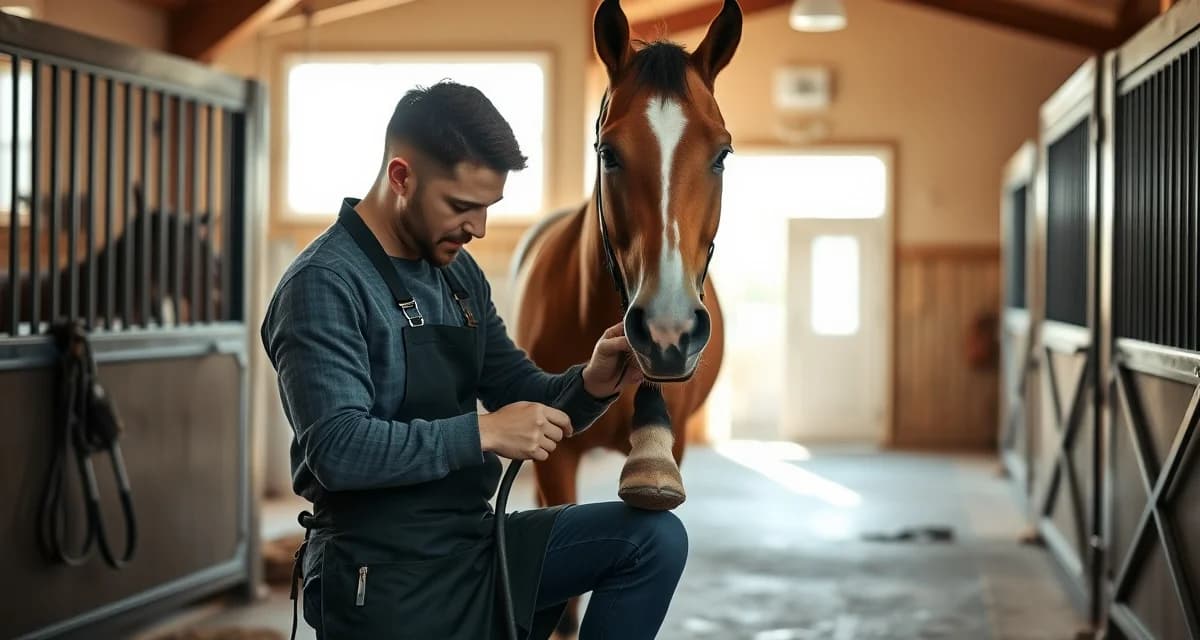
Farrier Scheduling Software for Connecticut: Gold Coast Equestrian Routes
Connecticut's Fairfield County has the highest per-horse spending on farrier services in the Northeast. The Gold Coast equestrian community in Greenwich, Westport, and the surrounding communities represents the kind of clientele that judges every service provider by their professionalism. Paper invoices and handwritten reminder calls are not the standard these clients expect.
TL;DR
- Fairfield County's Gold Coast equestrian community (Greenwich, Westport, Darien, New Canaan, Wilton) has the highest per-horse spending on farrier services in the Northeast -- these clients judge every service provider by professional standards that paper invoices and late billing simply fail to meet.
- Electronic same-day invoicing sent before leaving the property is the professional baseline Fairfield County clients expect -- a farrier who mails a handwritten bill weeks later is not competitive in this market.
- Litchfield County's northwest corner horse community (Washington, Kent, Roxbury) is sophisticated but more personal in character than Gold Coast accounts -- proper records and professional communication are still expected, with less focus on digital presentation.
- Connecticut's active hunter/jumper show circuit (spring and fall, venues from Greenwich to Hartford) requires interval tracking tied to competition dates -- overdue horses before a show date are a client relationship problem.
- Connecticut's compact geography lets a single farrier serve Fairfield and Hartford county clients on separate days without overnight travel -- route optimization across this compact state is meaningful for daily efficiency.
- Connecticut farriers command premium rates reflecting the state's cost of living and high client expectations -- professional software that presents at the level of the client demographic is not optional at the top of this market.
- Connecticut farriers using FarrierIQ's per-horse records, automated reminders, and professional invoicing operate at the standard Fairfield County and Litchfield County horse owners apply to all their service providers.
Connecticut farriers who present professionally, communicate clearly, and run organized operations stand out in a market where that kind of professionalism is the price of entry for the best accounts.
The Fairfield County Premium
The equestrian community in lower Fairfield County, from Greenwich through Darien, New Canaan, and Wilton, includes some of the most valuable private horse accounts in the Northeast. These are executives, finance professionals, and families who spend generously on their horses and want their service providers to reflect the same standards they hold in every other area of their lives.
FarrierIQ's invoicing tools generate clean, itemized invoices that are sent electronically the same day as the visit. That alone changes the perception of your operation. You're not the farrier who mails a handwritten bill two weeks later. You're a professional who sends a detailed electronic invoice before you've left the property.
Litchfield County: The Northwest Corner
Litchfield County in the northwest corner of Connecticut has a more rural character than Fairfield County, with a mix of equestrian estates, working farms, and pleasure horse boarding facilities. The Washington, Kent, and Roxbury area has a notable equestrian community that's somewhat insulated from the suburban pressure of lower Fairfield County.
These clients are also sophisticated but expect a different kind of professional relationship than the Gold Coast. More personal, more established. They still want proper records and professional communication. They're just a bit less focused on the digital presentation.
Scheduling for Connecticut's Show Community
Connecticut has an active hunter/jumper show community, with shows at venues from Greenwich to the Hartford area throughout the spring and fall seasons. Keeping your show horse clients on proper intervals and scheduling around show dates is part of serving this market well.
FarrierIQ's scheduling app tracks show horse intervals and sends automated reminders so your Connecticut show clients are never caught off-guard by an upcoming show with an overdue horse. That reliability is worth more to these accounts than almost anything else.
Route Planning in a Compact State
Connecticut is small enough that a single farrier can serve clients in Fairfield County and Hartford County on different days without overnight travel. FarrierIQ's route optimization makes those geographic transitions efficient by clustering stops within each day's territory.
Frequently Asked Questions
What farrier software is best for Connecticut's upscale horse community?
FarrierIQ's combination of professional invoicing, automated communication, and detailed hoof records matches the expectations of Connecticut's equestrian market. The mobile app works at job sites, which is where professional tools need to work.
How do I present professional invoices to high-value Connecticut clients?
FarrierIQ generates clean, itemized electronic invoices from your phone at the job site. The invoice includes horse name, services provided, date, and your business information. It's sent electronically immediately after the visit, which is the standard that high-value clients in markets like Fairfield County expect.
Does FarrierIQ support premium equestrian facilities in Connecticut?
Yes. FarrierIQ's records, scheduling, and communication tools work well for the premium equestrian market. The ability to store detailed hoof records, capture discipline-specific notes, and send professional invoices makes it a strong fit for Connecticut's upscale horse community.
How should Connecticut farriers handle the documentation expectations of Gold Coast barn managers?
Fairfield County barn managers at premium facilities expect the same documentation practices from their farrier that they apply to every other vendor managing valuable horses. This means per-visit records accessible on request, invoices that itemize each horse by name and service, and communication that confirms appointments rather than relying on informal memory. When a barn manager can pull up a horse's visit history on the horse owner portal directly, without calling you, the professional relationship operates at the level this market expects. A farrier who responds to record requests with vague memory rather than specific documented history is at a disadvantage in a market where the standard is set by the competitive end of the equine service industry.
What pricing structure works best for Connecticut farriers serving multi-horse accounts at premium facilities?
Multi-horse accounts at Greenwich and Westport facilities expect per-horse itemized invoicing, not a single flat fee for the barn visit. Each horse should be listed separately with its service type (trim, full set, reset, front shoes only), shoe details, and per-horse charge. A barn with 12 horses should receive a 12-line invoice, not a single lump sum. This level of detail is standard in the premium equestrian market and expected by the barn managers and owners who track expenses per horse for insurance and valuation purposes. FarrierIQ's invoicing generates this per-horse itemization from the mobile app at the barn before you leave.
Sources
- American Farrier's Association (AFA), Connecticut member directory and credential information
- Connecticut Horse Council, Connecticut equine industry resources and regional contacts
- American Association of Equine Practitioners (AAEP), equine veterinarian directory for Connecticut
- University of Connecticut Extension, equine resources for Connecticut agricultural communities
Get Started with FarrierIQ
Connecticut farriers serving the state's premium equestrian market from Fairfield County's Gold Coast to Litchfield County's estates use FarrierIQ's professional invoicing, automated reminders, and per-horse records to operate at the standard these clients expect. For farriers building or maintaining Gold Coast and northwest Connecticut accounts, farrier software for Connecticut provides the professional tools that differentiate organized practitioners in a premium market.