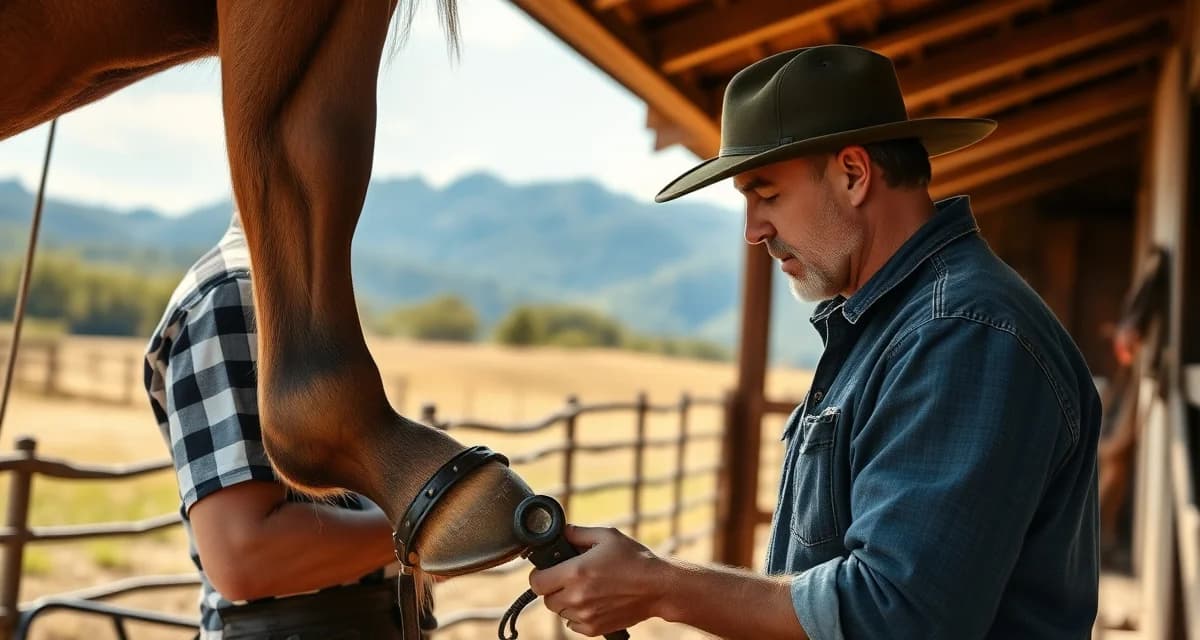
Farrier Software for Arkansas: Managing Horses in the Natural State
Arkansas has 155,000+ horses and some of the most rewarding and demanding farrier territory in the South. The Ozarks and Ouachita region are beautiful to work in, and they'll drop your cell signal without warning. River valley operations near Fort Smith and Little Rock are a different world entirely. You need software that works across both.
TL;DR
- Arkansas has 155,000+ horses with two distinct farrier markets: the Ozarks and Ouachita hill country (trail horses, intermittent or zero cell signal, long drives between stops) and the I-40 river valley corridor near Fort Smith and Little Rock (show horses, Quarter Horses, Paints, organized clients expecting professional communication).
- Offline is non-negotiable in the Ouachita National Forest area and the hill country around Mountain View and Ozark -- FarrierIQ stores all records locally on device, working fully without signal and syncing automatically when connectivity returns.
- Trail horse clients along the Ouachita Trail, Syllamo, and Buffalo National River corridor are flexible on scheduling but sometimes hard to reach -- automated appointment reminders reduce no-shows without manual follow-up.
- Route optimization across Arkansas's long distances between farms is a meaningful efficiency gain -- poorly sequenced days in the Ozarks add unnecessary miles that cut into per-day income.
- River valley show horse clients (Quarter Horses, Paints, Western pleasure) are organized and expect professional communication -- mobile invoicing sent before leaving the property signals the professional operation these clients expect.
- Per-horse records for trail horses documenting terrain type and intensity justify interval adjustments and protect the farrier if hoof condition questions arise.
- Arkansas farriers using FarrierIQ handle the full range of state operations from Ozark dead zones to Fort Smith suburban show barns in a single mobile platform.
FarrierIQ was designed with rural-first capability from the ground up. That matters in Arkansas more than in most states.
Offline is Non-Negotiable in the Ouachita
If you've worked the Ouachita National Forest area or the hill country around Mountain View and Ozark, you know how fast the bars disappear on your phone. It's not just inconvenient, it's a real workflow problem if your farrier app requires a connection to function.
FarrierIQ's offline app stores everything locally on your device. Pull up a horse's history, log a visit, take photos, add notes, all of it works without a signal. When you drive back into town, everything syncs automatically. You don't have to do anything extra.
That's how it should work for any farrier who spends time in rural Arkansas.
Route Planning Across Long Distances
Arkansas isn't compact. If you're covering northwest Arkansas near Fayetteville one day and Ouachita foothills the next, route planning is part of your overhead. Poorly sequenced days add unnecessary miles and cut into your income.
FarrierIQ's route optimization sorts your daily stops into the most efficient order automatically. You get more done per day without driving extra miles. Over a month of better routing, that adds up to real fuel savings and time back.
Managing Ozark Trail Horse Clients
Trail horse culture is strong in Arkansas. The Ouachita Trail, Syllamo, and the Buffalo National River corridor draw riders from across the region, and those horses need regular hoof care. Trail horse clients have different needs than show barn clients, they tend to be more flexible on scheduling but sometimes harder to reach.
FarrierIQ's automated appointment reminders help with that. You set the reminder, and the client gets a text the day before. Fewer no-shows, less chasing people down.
Per-horse records let you track individual trail horses' hoof conditions over time. If a horse is going through terrain that beats up feet faster, you document it. That history protects you if questions come up later.
Serving the River Valley Show Community
The I-40 corridor from Fort Smith to Little Rock has solid show horse activity. Quarter Horses, Paints, and Western pleasure horses are common. These clients tend to be organized and expect professional communication.
FarrierIQ's invoicing runs right from your phone. You finish a horse, send an invoice before you drive to the next stop. Clients who are used to organized service appreciate getting their invoice the same day. It also cuts down on end-of-week paperwork stacking up on you.
Frequently Asked Questions
What farrier app works in rural Arkansas?
FarrierIQ's offline-first design handles rural Arkansas perfectly. All records and scheduling work without cell service and sync when you're back in range.
How do Arkansas Ozark farriers handle dead zones?
FarrierIQ caches all your data locally, so losing signal doesn't interrupt your workflow. You can pull up any horse's full history and log visits without a connection.
Is there farrier software for the Arkansas horse community?
Yes. FarrierIQ handles the full range of Arkansas horse operations, from Ozark trail horses to River Valley show barns, with offline capability and route optimization built in.
How should an Arkansas farrier track trail horse hoof wear across different terrain types?
Per-horse notes should record which trail system a horse is working regularly -- the rocky Ouachita terrain beats up feet differently than the Buffalo National River's varied terrain or softer Syllamo soils. A note at each visit indicating recent trail use (light, moderate, heavy) and terrain type gives you a longitudinal record to justify interval adjustments. If a client pushes back on a 5-week interval because their horse "has always gone 8 weeks," the visit history showing accelerated wear on Ouachita rocky terrain is the professional response.
What should Arkansas farriers include in invoices to be considered professional by show horse clients?
Show horse clients in the Fort Smith and Little Rock corridor expect itemized digital invoices delivered same day. The invoice should list each horse by name, service type (trim, full set, reset, front only), materials used (shoe type and size, pads, studs if applicable), and the per-horse charge. A total with any applicable travel fee should be clear. Sending this from your phone before leaving the property -- not days later -- is the practice that distinguishes organized farriers from those who batch invoicing at the end of the week. Clients who write checks at the barn appreciate getting their invoice the same day so accounting is clean.
Related Articles
- Managing Thrush in Horses: Farrier Treatment and Preventive Shoeing
- Farrier App for Indianapolis IN: Managing Hoosier State Horse Communities
Sources
- American Farrier's Association (AFA), Arkansas member directory and credential information
- Arkansas Livestock and Poultry Commission, Arkansas equine industry resources
- American Association of Equine Practitioners (AAEP), equine veterinarian directory for Arkansas
- University of Arkansas Cooperative Extension, equine resources for Arkansas agricultural communities
Get Started with FarrierIQ
Arkansas farriers working across the Ozarks' offline terrain and the river valley's show horse community use FarrierIQ's offline-first platform, route optimization, and mobile invoicing to run professional practices that work in both environments. From Ouachita hill country dead zones to organized Fort Smith show barn clients, FarrierIQ's tools handle the full range of what professional farrier practice in the Natural State requires.