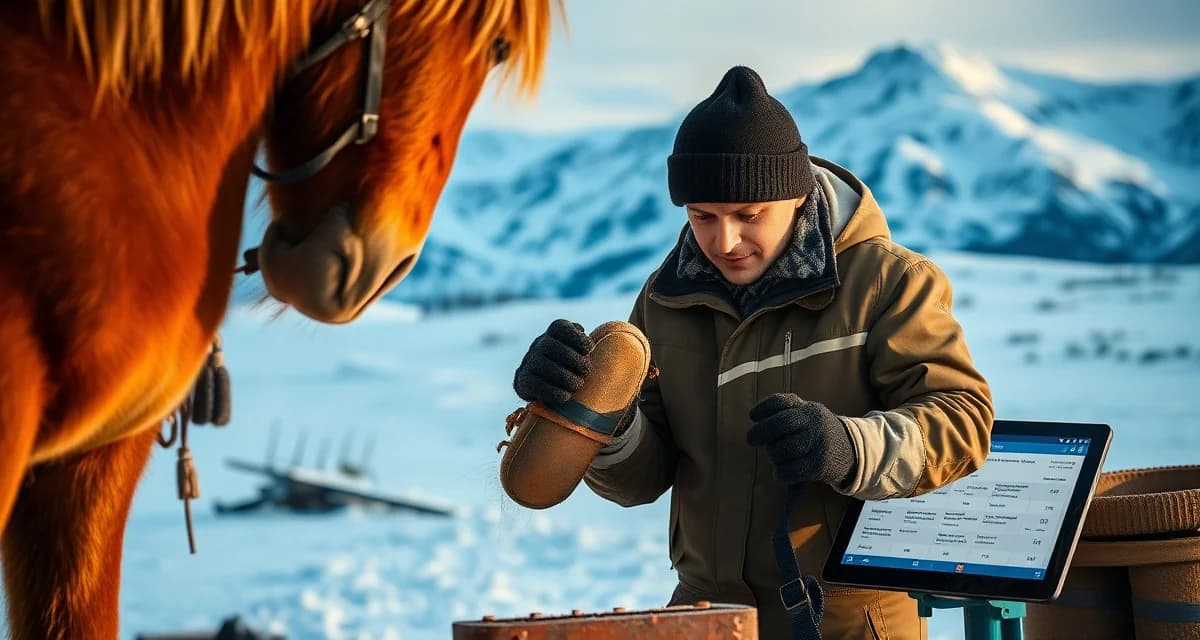
Farrier Software for Alaska: Managing Horses at the Edge of the World
Alaska's 8,000+ horses live in some of the most challenging conditions any farrier anywhere has to work through. Extreme cold, remote locations, unreliable connectivity, and weather that can cancel or delay appointments without warning -- this is not a state where you can rely on software built for suburban horse barns in Florida.
TL;DR
- Alaska's 8,000+ horses are distributed across conditions that make standard farrier software impractical -- extreme cold, unreliable connectivity outside Anchorage and Fairbanks metro areas, weather cancellations, and remote properties require offline-first capability as a non-negotiable baseline.
- FarrierIQ's offline mode stores all records locally on the device -- horse history, visit logs, photos, and notes all work without signal, syncing automatically when connectivity returns.
- Alaska's farrier calendar doesn't work like the lower 48 -- weather events shut down roads, winter conditions make properties inaccessible for days, and scheduling flexibility to absorb these disruptions without losing interval tracking is essential.
- Wet tundra in summer and frozen ground in winter create hoof challenges that require longitudinal per-horse documentation -- photo-capable records built over a full Alaska year give farriers the clinical history to anticipate seasonal problems.
- Alaska's equestrian community is small and close-knit -- reputation travels fast, and the professional follow-through of automated reminders, prompt invoicing, and organized scheduling matters more in a tight market where losing one client is a real loss.
- The combination of extreme remote geography and small total market size makes professional software a differentiator for Alaska farriers -- clients have few options and can identify organized practitioners quickly.
- Alaska farriers using FarrierIQ's horse owner portal signal professional organization that clients in a remote market particularly appreciate when evaluating which of few available farriers to trust.
FarrierIQ's offline-first, flexible design is about as close as farrier software gets to being built for Alaska's realities.
Connectivity is Not a Given
In much of Alaska, reliable cell service is a luxury. If you're working outside the Anchorage or Fairbanks metro areas, you may be operating with intermittent or zero connectivity for large portions of your working day.
FarrierIQ's offline app treats offline capability as the default, not a fallback. Every horse record, every appointment, every client note is stored locally on your device. You do your work, log your visits, add photos and notes, all without needing a signal. When you're back in range, everything syncs automatically.
That's not a nice-to-have for Alaska farriers. It's non-negotiable.
Scheduling Around Alaska's Realities
Alaska's farrier calendar doesn't work like the lower 48. Weather events can shut down roads. Winter conditions can make certain properties inaccessible for days at a time. You need scheduling flexibility that can absorb these disruptions without breaking your whole system.
FarrierIQ's scheduling app makes rescheduling fast and clean. When a day gets wiped out by weather or road conditions, you move appointments without losing track of where each horse is in its care cycle. The system keeps interval tracking intact so overdue horses stay flagged even when your schedule shifts around.
Managing Records Through Harsh Conditions
Alaska horses often face hoof challenges that mainland horses don't deal with the same way. Wet tundra conditions in summer, frozen ground in winter, and extreme cold that affects hoof flexibility and shoe adhesion. Documenting these seasonal patterns in each horse's record creates a real clinical history over time.
FarrierIQ's per-horse records include photo capability, so you can document hoof conditions across seasons. Over a year, you build a longitudinal record that helps you anticipate problems and demonstrate your expertise to clients who are serious about their horses.
Professional Communication in a Tight Market
Alaska's equestrian community is small and close-knit. Your reputation travels fast. Showing up organized, sending reminders before visits, and getting invoices out promptly are the kinds of details that build long-term client relationships.
FarrierIQ automates the communication that most farriers let slide, appointment reminders, invoice delivery, and follow-up scheduling. In a small market where losing one client hurts, that level of professional follow-through matters.
Frequently Asked Questions
What farrier app works in rural Alaska?
FarrierIQ is built offline-first, meaning it functions fully without cell service. That makes it one of the few farrier apps genuinely usable in Alaska's remote areas.
How do Alaska farriers handle extreme remote routes?
FarrierIQ's offline mode, flexible scheduling, and rescheduling tools handle the unpredictability of Alaska's terrain and weather. Records are always accessible regardless of connectivity.
Is there offline farrier software that works in Alaska?
Yes. FarrierIQ was designed so that offline is the primary mode, not an afterthought. All data lives on your device first and syncs when connectivity is available.
How should an Alaska farrier handle a client book when weather cancellations are routine?
FarrierIQ's rescheduling tools let you move appointments quickly without losing track of where each horse is in its care cycle. When a weather event cancels a full day, the interval tracking for each affected horse stays intact -- the system keeps overdue horses flagged even when your schedule shifts. For Alaska farriers managing a client book where weather disruptions happen multiple times per winter, this prevents the manual recalculation of intervals that leads to horses falling through the cracks after consecutive weather delays.
What hoof-specific records should Alaska farriers keep to document seasonal challenges?
Per-horse records should note hoof condition relative to season -- specifically, whether freeze-thaw cycling is affecting hoof wall integrity, how white line condition changes between summer tundra and winter frozen ground exposure, and whether extreme cold is affecting shoe retention or nail patterns. Photo documentation at each visit creates a visual longitudinal record across Alaska's dramatic seasonal transitions. A horse photographed in October, January, March, and June tells a story about how its hooves respond to Alaskan conditions that text notes alone don't capture as clearly.
Related Articles
Sources
- American Farrier's Association (AFA), Alaska member directory and credential information
- Alaska Division of Agriculture, Alaska equine industry resources
- American Association of Equine Practitioners (AAEP), equine veterinarian resources for Alaska
- University of Alaska Fairbanks Cooperative Extension, agricultural resources for Alaska horse owners
Get Started with FarrierIQ
Alaska farriers working in one of the most demanding farrier environments in the country use FarrierIQ's offline-first platform to maintain complete records and scheduling regardless of connectivity -- from Anchorage metro properties to remote interior accounts hours from reliable cell coverage. The combination of offline capability, flexible rescheduling for weather disruptions, and per-horse longitudinal photo records makes FarrierIQ the practical choice for professional farrier practice in Alaska's challenging conditions.