Farrier Payment Collection: Get Paid Faster in the Field
Farriers lose an estimated $4,200 per year on average to uncollected invoices. That's not one big bad debt. That's dozens of small unpaid bills that aged out, got forgotten by clients, or simply never got followed up on consistently.
Farrier payment collection is a solvable problem. It requires two things: collecting payment on the spot whenever possible, and having an automatic follow-up system for the invoices that don't get paid immediately.
This guide covers both.
TL;DR
- Farriers lose an estimated $4,200 per year on average to uncollected invoices -- not from a few bad clients, but from dozens of small bills that aged out without consistent follow-up.
- Paper invoices average 23 days to collect; mobile same-day invoicing averages less than 2 days -- the difference is almost entirely timing and delivery method, not client willingness to pay.
- The best payment collection strategy for regular clients is card on file: authorized card storage lets you charge payment when you create the invoice, before the client even receives the notification.
- Same-day invoices sent before leaving the farm get paid in 2-5 days on average; invoices sent a week later take 2-3 weeks; invoices sent a month later are the ones you're chasing.
- Automatic payment reminders at 3, 7, and 14 days overdue resolve most outstanding invoices without any manual effort -- most unpaid invoices close at the 3-day or 7-day touchpoint.
- 47% of horse owners still prefer cash or check -- FarrierIQ records cash payments in transaction history identically to card payments, so your income totals and annual financial summary capture all payment types.
- The collection conversation is easier when you frame it as an assumed routine: "Want to pay by card today or prefer the payment link in your invoice?" assumes payment and gives two options rather than asking permission.
Why Farriers Struggle to Collect Payment
The core issue is timing. A service is rendered, an informal billing happens ("I'll get an invoice to you"), and then the window for easy collection starts closing.
Paper invoices average 23 days to collect. Mobile same-day invoicing averages less than 2 days. That gap is almost entirely driven by the timing and delivery method of the invoice, not by client willingness to pay.
Most horse owners intend to pay promptly. They're not bad people. But life is busy, memory is short, and an invoice that's already been on the counter for two weeks blends into the background. An invoice with a "Pay Now" button that arrived on their phone 20 minutes after you shoed their horse gets paid today.
Step 1: Collect on the Spot Whenever Possible
The fastest payment collection strategy is same-visit collection. Before you leave the farm, payment is handled.
This requires three things:
- A way to take the payment (card reader, cash)
- An invoice or receipt to give the client
- A habit of asking for payment before you pack up
Accepting Credit Cards as a Farrier
You need to be able to take cards at the farm. Horse owners increasingly expect it. Many won't have a checkbook. Cash is inconvenient for larger bills.
FarrierIQ integrates card payment processing. You can:
- Charge a card on file: For regular clients who've authorized card storage, you can process payment when you create the invoice. Done before you leave.
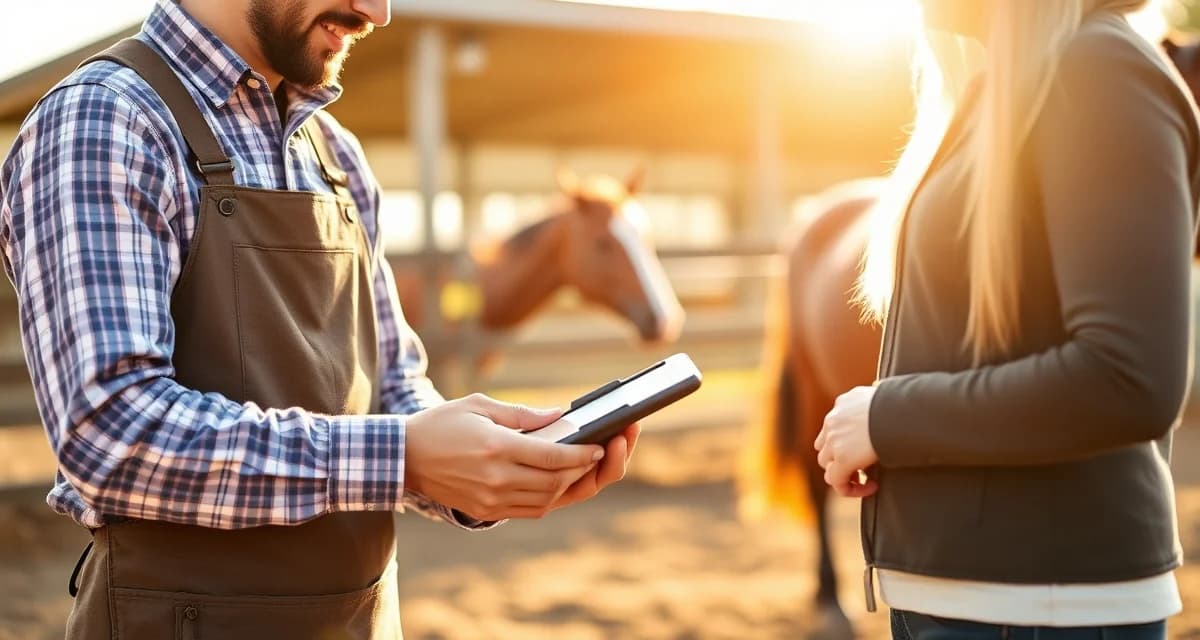
- Use an in-person card reader: A small tap-to-pay reader that works with your phone. Owner taps their card or phone, payment processed, receipt sent.
- Send a payment link: Owner pays from their phone via the invoice link. Often happens while you're still loading the trailer.
Card payments eliminate the "I'll write you a check later" conversation that often leads to delayed collection.
Asking for Payment: Making It Normal
Some farriers feel awkward asking for payment. The fix is to make payment collection a routine part of your exit process, not a special request.
"All set, want to pay by card today or would you prefer to use the payment link in your invoice?" gives the client two options and assumes payment, which is appropriate.
Most clients are comfortable with this framing. You're a professional running a business. Getting paid is normal.
Step 2: Same-Day Invoicing for Clients Not Paying on Site
For clients who prefer to receive an invoice and pay remotely, the goal is to get that invoice to them before you leave the property.
FarrierIQ's one-tap invoicing creates and sends a professional invoice in under two minutes. The invoice goes to the client's phone or email with a payment link.
Clients who receive same-day invoices pay in 2-5 days on average. Clients who receive invoices a week later take 2-3 weeks. Clients who receive invoices a month later are the ones you're chasing.
See the farrier invoicing app guide for the full same-day invoicing workflow.
Step 3: Automatic Payment Reminders for Outstanding Invoices
Not every client pays immediately. Some need a nudge. Automatic payment reminders handle this without any manual effort from you.
FarrierIQ's reminder system sends automatic follow-up messages at intervals you configure:
- 3 days after invoice: A friendly reminder that the invoice is outstanding
- 7 days overdue: A slightly more direct follow-up noting the overdue balance
- 14 days overdue: A firmer reminder that may include a note about your late payment policy
- 30 days overdue: An alert to your own dashboard that this invoice needs personal attention
These messages go out automatically. You're not making calls. You're not writing reminder emails. The system handles it, and most outstanding invoices get resolved at the 3-day or 7-day touchpoint.
Step 4: Card on File for Regular Clients
The best payment collection strategy for regular clients is to have a card on file. With explicit client authorization, you can process payment when you create the invoice, before the client even receives the notification.
Here's how this works in practice:
- When onboarding a new regular client, explain that you keep a card on file for easy billing
- Client provides card authorization (FarrierIQ handles secure storage)
- After each visit, you create the invoice and it charges the card automatically
- Client receives a receipt by email/text confirming the charge
For clients on monthly or regular schedules who trust you, this is the most convenient arrangement for everyone. They don't have to do anything. You get paid automatically.
Step 5: What Is the Best Way to Collect Payment After Shoeing a Horse?
The honest answer: whichever method gets money in your account fastest.
Best for immediate collection: Card on file (charged when invoice is created) or in-person card tap.
Best for same-visit collection: Card reader or payment link sent before you leave.
Best for clients who prefer to pay remotely: Same-day invoice with payment link via text.
Worst: Paper invoice mailed later, verbal agreement to pay "soon," or any method that requires client action more than 24 hours after the visit.
The pattern that works for most farriers is tiered by client type: regular clients on card on file, responsive clients on same-day invoice, occasional clients on immediate payment request.
Can Farrier Software Send Automatic Payment Reminders?
Yes. FarrierIQ's automatic reminder system tracks every outstanding invoice and sends follow-up messages at your configured intervals.
You can customize:
- When reminders trigger (3 days, 7 days, 14 days)
- What the messages say (templates provided, fully editable)
- Which clients receive automated reminders (some clients you may prefer to contact personally)
The system also surfaces invoices that remain unpaid after 30 days in a dashboard view so you can escalate personally. At that point, you have the complete invoice history and communication record in one place.
Handling Cash Payment as a Farrier
Many horse owners still pay in cash. FarrierIQ records cash payments the same way as card payments, you tap "cash received" and enter the amount when you create the invoice.
Cash is recorded in your transaction history, tracked in your monthly income totals, and available in your annual financial summary. No separate cash log needed.
For the 47% of horse owners who still prefer cash or check, FarrierIQ handles mixed payment methods without any bookkeeping headaches.
Related Articles
FAQ
How do I accept credit cards as a farrier?
FarrierIQ includes card payment processing that works in three ways: a payment link in the invoice (clients pay from their phone), a card on file (charged automatically when you create the invoice), or an in-person card reader for tap-to-pay at the farm. Card acceptance considerably increases same-visit collection rates, owners who might have said "I'll write a check this week" often pay by card on the spot.
What is the best way to collect payment after shoeing a horse?
The best method is whichever closes payment before you leave the farm. For regular clients, card on file allows automatic billing when you create the invoice. For clients who prefer to handle payment themselves, a same-day invoice with a payment link gets you paid within 2-5 days on average, 20 days faster than mailed paper invoices. In-person card readers work well for clients who want to pay immediately on-site.
Can farrier software send automatic payment reminders?
Yes. FarrierIQ tracks every outstanding invoice and sends automatic follow-up reminders at intervals you configure, typically at 3, 7, and 14 days overdue. These go out without any manual action from you. Most outstanding invoices are resolved by the first or second automated reminder. Invoices that reach 30+ days overdue surface in a dashboard alert for personal follow-up.
How should farriers handle clients who are chronically late payers without losing the account?
Chronically late payers are best converted to card on file, where possible, before you have another collection conversation. When a client has paid late twice or more, propose the card on file arrangement as a convenience for them: "I can set up automatic billing so you don't have to remember to pay each time -- most of my regular clients prefer it." Many chronically late payers accept this enthusiastically because they know their own habits. For clients who refuse card on file, the next option is requiring payment at time of service (in-person card or cash only) with a clear communication that you're moving away from invoice billing for their account. The farrier client management guide covers how to document payment history and escalation steps in FarrierIQ so you have a complete record if a collection issue ever requires formal follow-up.
Stop Being the Collections Department
The $4,200 in annual uncollected invoices that the average farrier loses isn't going to a bad place. It's sitting in clients' bank accounts waiting for the right payment process to collect it.
Same-day invoicing, card on file, and automatic reminders are the three-step system that recovers most of it. FarrierIQ includes all three in every plan.
Sources
- American Farrier's Association (AFA), farrier business management and invoicing resources
- Small Business Administration (SBA), payment collection best practices for mobile service providers
- Internal Revenue Service (IRS), payment record-keeping requirements for self-employed service businesses
Get Started with FarrierIQ
Farriers lose $4,200/year average to uncollected invoices -- FarrierIQ's same-day farrier invoicing app, card on file for regular clients, and automatic payment reminders at 3, 7, and 14 days overdue recover most of it without any manual follow-up. Try FarrierIQ free and send your first same-day invoice before you leave your next barn.