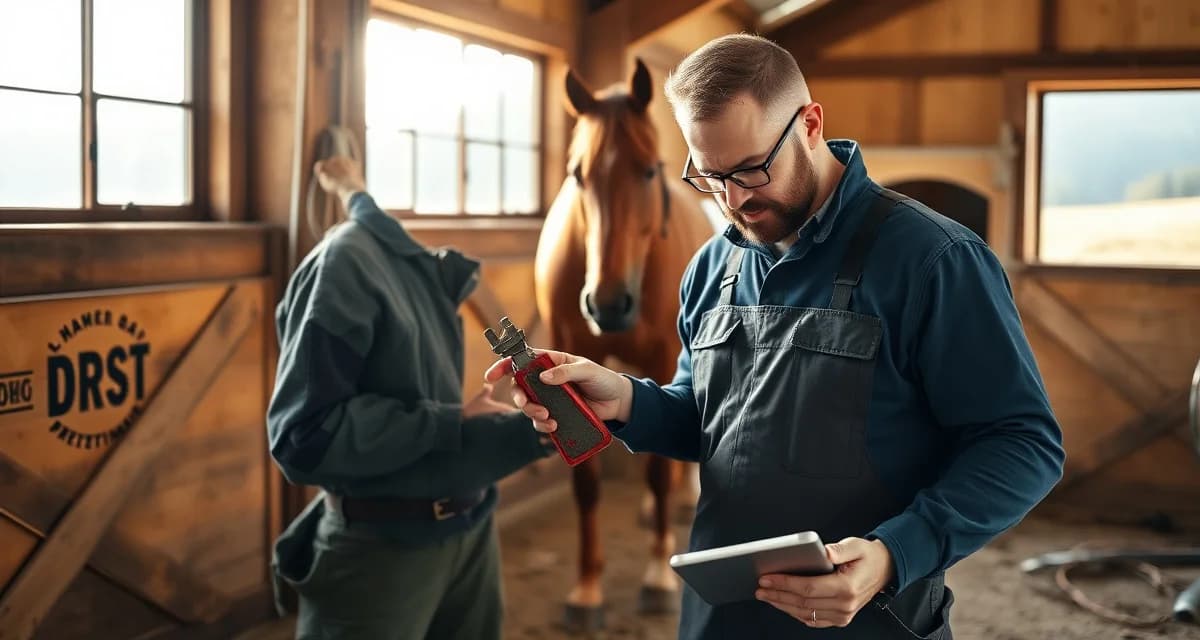
Farrier App for Spokane WA: Managing Inland Northwest Horse Communities
Spokane sits at the center of one of the most spread-out horse communities in the Pacific Northwest. The Spokane metro area has 25,000+ horses, and many accounts extend into Northern Idaho -- making Spokane farriers some of the few who regularly cross state lines as part of a normal work week.
That multi-state routing is something most farrier apps weren't built to handle. FarrierIQ manages the Spokane-to-Idaho routing challenge without forcing you into workarounds.
TL;DR
- Spokane metro has 25,000+ horses with regular routes extending into Northern Idaho -- Spokane farriers who cross into Kootenai County and the Coeur d'Alene area as routine stops need software that organizes clients by geography, not by state.
- The Spokane Valley, Liberty Lake area, and communities toward the Palouse all have substantial horse populations -- routes that start in Spokane proper frequently extend into Post Falls, Coeur d'Alene, and North Idaho communities.
- Routes out toward Cheney, Rosalia, or into the Palouse farm country have inconsistent cell service on back roads -- FarrierIQ's offline mode downloads client data before you leave and syncs everything when you return to coverage.
- FarrierIQ's route optimization treats the entire Spokane-to-Idaho client list as a single geographic problem -- no manual sorting across two state lists; Spokane Valley morning appointments and Idaho afternoon stops all optimize together.
- Spokane's book mix (suburban boarding facility horses, rural small farm horses, occasional performance horse accounts) requires flexible records that handle different horse types without different workflows.
- No Washington or Idaho state farrier licensing requirements exist -- but Spokane's competitive farrier market and the Inland Northwest show horse community reward AFA credentials and organized professional documentation.
- Palouse farm country routes are some of the most geographically spread in the Pacific Northwest -- the flat terrain that makes farming efficient creates long distances between stops that route optimization helps minimize.
The Inland Northwest Farrier Market
Spokane is genuinely large horse country. The Spokane Valley, Liberty Lake area, and communities out toward the Palouse all have substantial horse populations. Routes that start in Spokane proper frequently extend into Post Falls, Coeur d'Alene, and the communities of North Idaho -- sometimes in the same day.
For a Spokane farrier, that means your book spans two states with different geographic terrain, and your route planning needs to account for the I-90 corridor, back roads through the Palouse, and the seasonal conditions that come with working at elevation.
Multi-State Routing Made Simple
Spokane's position between Washington and Idaho creates a routing situation that's unique in the Pacific Northwest. Many farriers based in Spokane run regular routes that cross into Kootenai County Idaho or even into the Coeur d'Alene area. Managing clients on both sides of the state line -- with different area codes, different address formats, and different geographic clusters -- requires software that doesn't care about state boundaries.
FarrierIQ's route optimization tools treat your entire client list as a single geographic problem and build the most efficient path regardless of which state your stops are in. You can cluster your Spokane Valley appointments in the morning and your Idaho appointments in the afternoon without manually sorting clients across two lists.
Offline Mode for Remote Cheney and Palouse Routes
The communities around Spokane aren't all urban. Routes out toward Cheney, Rosalia, or into the Palouse farm country often go through areas where cell service is inconsistent. If your software requires a data connection to access records, you're working blind on these routes.
FarrierIQ's offline farrier app downloads your client data before you leave and syncs everything when you're back in coverage. You can pull up a horse's shoeing history, add notes, and create invoices in full offline mode -- all of which syncs automatically when service returns.
Managing Farrier Software in Washington and Idaho
Spokane farriers who split their book between WA and ID clients benefit from software that keeps everything in one organized system. There's no need for separate tools or separate lists for each state. FarrierIQ tracks clients by location regardless of state, so your Spokane Valley book and your Coeur d'Alene stops are organized together by geography.
What Spokane Farriers Use
Farriers based in the Spokane area tend to have books that mix suburban boarding facility horses, rural small farm horses, and the occasional performance horse account. The variety means you need flexible record-keeping that handles different horse types without requiring different workflows for each one.
FarrierIQ's per-horse profiles work across all horse types. Whether you're tracking a trail horse in the South Hill neighborhood or a reining horse out toward Medical Lake, the same record system handles it. The farrier client management guide covers how to structure diverse Spokane-area client types within the same system efficiently.
Frequently Asked Questions
What farrier app is popular in Spokane Washington?
FarrierIQ is used by Inland Northwest farriers who need to manage routes that cross into Northern Idaho and navigate Spokane's spread-out horse community. The combination of route optimization and offline mode makes it well-suited for the geographic realities of the Spokane market -- routes that extend into areas with variable cell service and that regularly cross state lines.
How do Inland Northwest farriers handle cross-state routes?
The key is having software that organizes clients by location rather than by state. Farriers who manually maintain separate lists for WA and ID clients waste time every week switching between systems. FarrierIQ treats your entire client geography as a single routing problem, building optimized routes that don't care about state lines. For farriers running the Spokane-to-Coeur d'Alene corridor regularly, this approach saves real time and fuel.
Is there farrier software for the Cheney WA horse community?
FarrierIQ handles the Cheney area and the broader West Plains horse community around Spokane. Cheney-area routes often involve longer drives between stops with spotty cell service on some back roads. FarrierIQ's offline mode and route optimization tools are designed exactly for this kind of route -- where you need your records available whether or not you have a signal, and where smart routing cuts your drive time across a wide geographic area.
How does Spokane's winter affect farrier scheduling and route management?
Eastern Washington winters are serious -- Spokane gets significant snow and ice, and route days that would be straightforward in October can become challenging in December and January. Winter scheduling in Spokane requires both physical flexibility (barn access, footing, temperature) and scheduling flexibility (snow days, icy road cancellations). FarrierIQ's interval tracking is particularly important through Spokane winters because horses that miss a visit due to weather need to be rescheduled promptly once conditions allow -- the overdue horse alert system prevents any horse from being quietly missed through a series of weather-related reschedules. Documenting winter hoof conditions (snowball prevention setups, traction modifications, hoof quality observations from cold-weather work) creates a seasonal baseline for each horse that informs the following winter's approach.
What's the most efficient route structure for a Spokane farrier with both WA and ID accounts?
The most efficient Spokane bi-state structure treats the Idaho extension as a dedicated outbound day rather than mixing Spokane and Coeur d'Alene stops in the same day. An Idaho day that runs from Spokane through Post Falls to Coeur d'Alene and back covers the I-90 corridor efficiently with 6-8 stops; mixing these with South Hill or Medical Lake Spokane stops adds unnecessary backtracking on the I-90 corridor. Spokane Valley stops work well as their own route cluster (Spokane Valley-Liberty Lake-Airway Heights in a loop). Palouse farm country (Cheney, Rosalia, Colfax direction) deserves its own dedicated outbound day with offline preparation before leaving coverage. FarrierIQ's route optimization handles within-day sequencing for each zone type; the zone-day structure is the manual discipline that keeps the cross-state and back-country routing manageable.
Sources
- Washington State University Extension, Washington horse population and Inland Northwest equine management resources
- Washington Department of Agriculture, state equine industry statistics
- American Farrier's Association (AFA), Northwest regional farrier professional resources
- Federal Communications Commission (FCC), rural broadband coverage data for Eastern Washington and Northern Idaho
Get Started with FarrierIQ
Spokane's 25,000+ horse Inland Northwest market with regular Idaho extensions and Palouse farm country routes requires a system that handles cross-state routing as easily as single-state routing and offline capability for the back roads where signal disappears -- FarrierIQ's route optimization and offline farrier app handle both. Try FarrierIQ free and run your first optimized Spokane-to-Idaho route on your next work day.