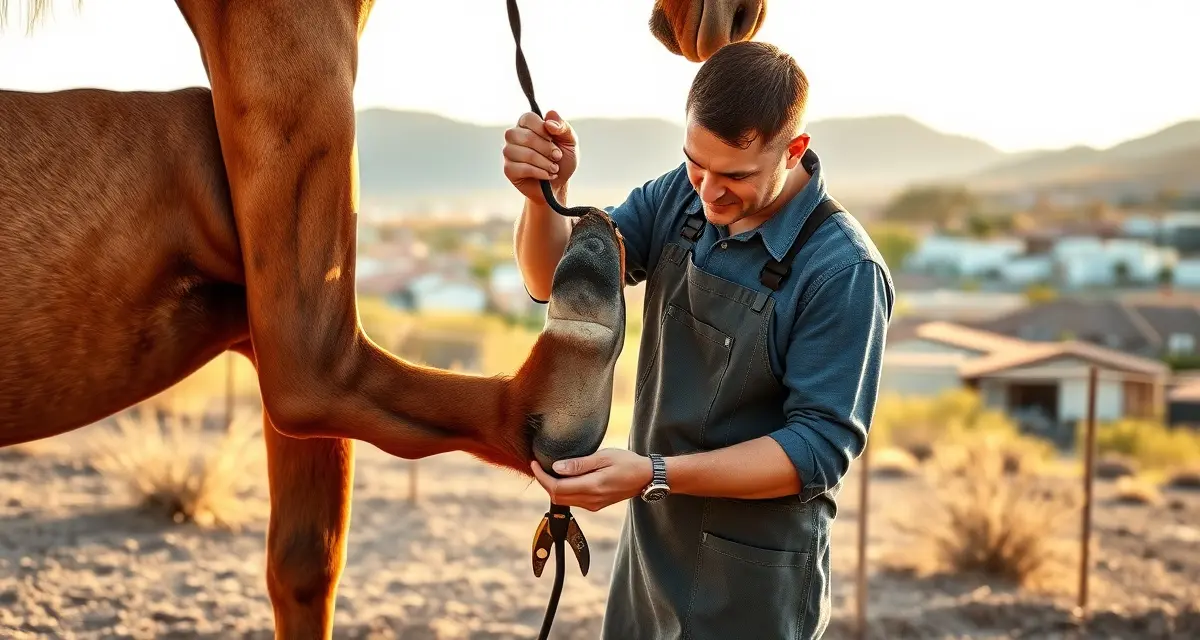
Farrier App for Phoenix AZ: Managing Valley of the Sun Horse Communities
Phoenix metro has more than 55,000 horses, making it one of the largest urban horse markets in the Southwest. The Valley of the Sun is vast. Scottsdale, Gilbert, Queen Creek, Chandler, Peoria, Cave Creek, and everything in between. A farrier working the Phoenix market can build an enormous book, but only if they have the routing and scheduling tools to manage it without burning out on windshield time.
The year-round riding season is one of the biggest draws of working Phoenix. There's no winter slowdown. But that also means the scheduling pressure never lets up.
TL;DR
- Phoenix metro has 55,000+ horses in one of the largest urban horse markets in the Southwest -- the Valley spans from Cave Creek in the north to Queen Creek in the southeast, a geographic spread that makes zone-based routing essential rather than optional.
- Queen Creek and Gilbert have grown substantially over the past decade and now form a dense horse community almost separate in character from Scottsdale's sport horse barns or the pleasure horse communities in Peoria and Surprise.
- Phoenix's year-round riding season means no winter slowdown and no natural administrative reset -- invoicing, records, and scheduling need to run in parallel with the work continuously, not catch up during a slow month.
- Desert heat means early morning routes -- managing your day around peak afternoon heat is standard operating procedure for Phoenix farriers; less time on paperwork in a hot truck means more time working when conditions are bearable.
- Zone-based routing (Queen Creek days separate from Scottsdale days, Cave Creek stops separate from Chandler) is the key structural decision -- without it, cross-metro driving in a 55,000-horse metro burns 90+ minutes per day.
- No Arizona state farrier licensing requirement exists -- but Scottsdale's sport horse market and Cave Creek's established equestrian community reward AFA credentials and professional documentation standards.
- At 8-10 horses per day across a 22-day month in Phoenix's year-round market, same-day invoicing eliminates the administrative backlog that accumulates without systematic billing.
The Scale of the Phoenix Market
Most equestrian markets have a geographic center. Phoenix doesn't, really. It sprawls. Queen Creek in the southeast has a dense horse community that's almost a separate market from Cave Creek and Carefree in the north. Scottsdale's sport horse barns operate differently from the pleasure horse community in Peoria or Surprise.
FarrierIQ's route optimization is genuinely essential in a market this size. Without it, you're spending more time driving than working. With it, you're building zone-specific days that cluster your stops efficiently and get you through more horses per workday.
Year-Round Scheduling Pressure
The flip side of no winter slowdown is that there's also no natural reset point. You're not catching up on billing and records during a slow January because January is busy. The administrative side of running a farrier business in Phoenix needs to run in parallel with the work, not catch up later.
FarrierIQ's scheduling app keeps your book current in real time. Invoices go out the same day. Appointment reminders fire automatically. Overdue horse alerts let you know when a horse in your book has gone past their interval without a new appointment. You don't have to set aside a Sunday afternoon to manage the calendar because the system does it continuously.
Queen Creek and Gilbert
The Queen Creek and Gilbert horse communities have grown substantially over the past decade. New development has pushed equestrian properties further southeast, but the density of horses per square mile in these areas makes them worth routing regularly. FarrierIQ lets you set up recurring appointment blocks in specific communities so you're visiting Queen Creek stops on a predictable schedule that clients can count on.
Heat Management and Record Keeping
Phoenix summers are another reality of working this market. You're managing not just horse records but your own schedule around heat. Working early mornings, avoiding peak afternoon heat, finishing your day at a barn with shade and water. Having your administrative work handled by an app instead of paperwork means less time sitting in a hot truck filling out forms.
Frequently Asked Questions
What farrier app is popular in the Phoenix AZ area?
FarrierIQ is used by farriers across the Phoenix metro. Its route optimization is particularly useful in a market the size of the Valley, where geographic spread is one of the biggest challenges for solo farriers building an efficient book.
How do Phoenix Valley farriers manage the massive geographic spread?
Zone-based routing is the key, running Queen Creek days separately from Scottsdale days, and Cave Creek stops separately from Chandler or Peoria stops. FarrierIQ's route optimization builds those geographic clusters automatically so your schedule reflects the actual geography of the Valley.
Is there farrier software for the Queen Creek and Gilbert AZ horse community?
Yes. FarrierIQ works across the full Phoenix metro, from Cave Creek in the north to Queen Creek and Gilbert in the southeast. It handles records, scheduling, invoicing, and route optimization for farriers anywhere in the Valley of the Sun.
How does Phoenix's year-round heat affect hoof documentation practices?
Arizona's desert climate creates distinctive hoof conditions that are worth tracking per horse year-round. The dry heat desiccates hooves faster than almost any other US climate -- horses without regular moisture supplementation develop brittle walls, dry frogs, and contracted heels that show up gradually across multiple visits. Documenting hoof moisture condition notes per visit creates a baseline that lets you identify which horses are trending toward heat-related hoof problems before they become serious. In the summer monsoon season (July-September), Phoenix gets brief intense humidity and rainfall that temporarily reverses dryness -- horses with previously brittle walls can develop hoof integrity issues when rapidly cycling between dry and wet conditions. The farrier hoof health records guide covers the documentation structure that captures these seasonal desert hoof patterns most effectively.
What's the most effective weekly route structure for a farrier covering the full Phoenix Valley?
The Phoenix Valley's scale makes a zone-week structure more effective than zone-day for farriers with full books. Dedicated weeks or multi-day blocks for each major zone -- a Scottsdale-Cave Creek-Carefree block, a Queen Creek-Gilbert-Chandler block, a Peoria-Surprise-Glendale block -- allow you to exhaust one area before moving to another rather than crisscrossing the metro daily. Within each zone block, FarrierIQ's route optimization sequences each day's stops efficiently. The value of the zone-week structure is that new clients who call from within your current zone week get immediate service without disrupting your routing, while clients in other zones get scheduled for when you're next in their area. This discipline is what allows Phoenix farriers to build 80-100+ horse books that remain profitable rather than just large.
Sources
- Arizona Department of Agriculture, Arizona horse population and equine industry statistics
- University of Arizona Cooperative Extension, equine management in desert climates
- American Farrier's Association (AFA), Southwest regional farrier professional resources
- American Farriers Journal, Phoenix metro farrier market and year-round scheduling data
Get Started with FarrierIQ
Phoenix's 55,000+ horse year-round market across a sprawling desert metro makes route optimization and systematic scheduling the difference between a sustainable book and a chaotic one -- FarrierIQ's route optimization, continuous interval tracking, and same-day invoicing handle the Valley's scale without requiring a Sunday afternoon to catch up. Try FarrierIQ free and run your first optimized Phoenix zone day before your next work day.